01
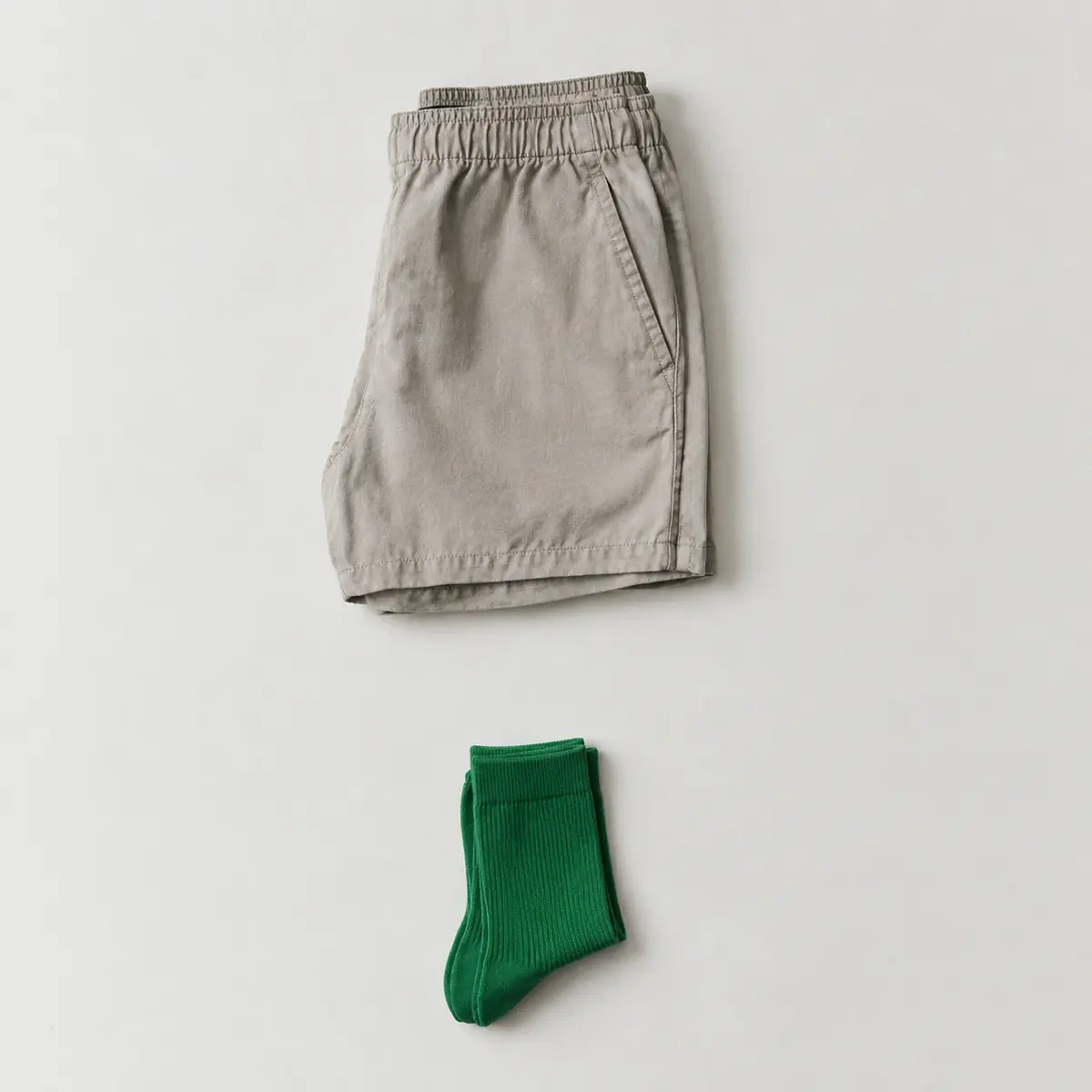
Shorts — the rule does not apply
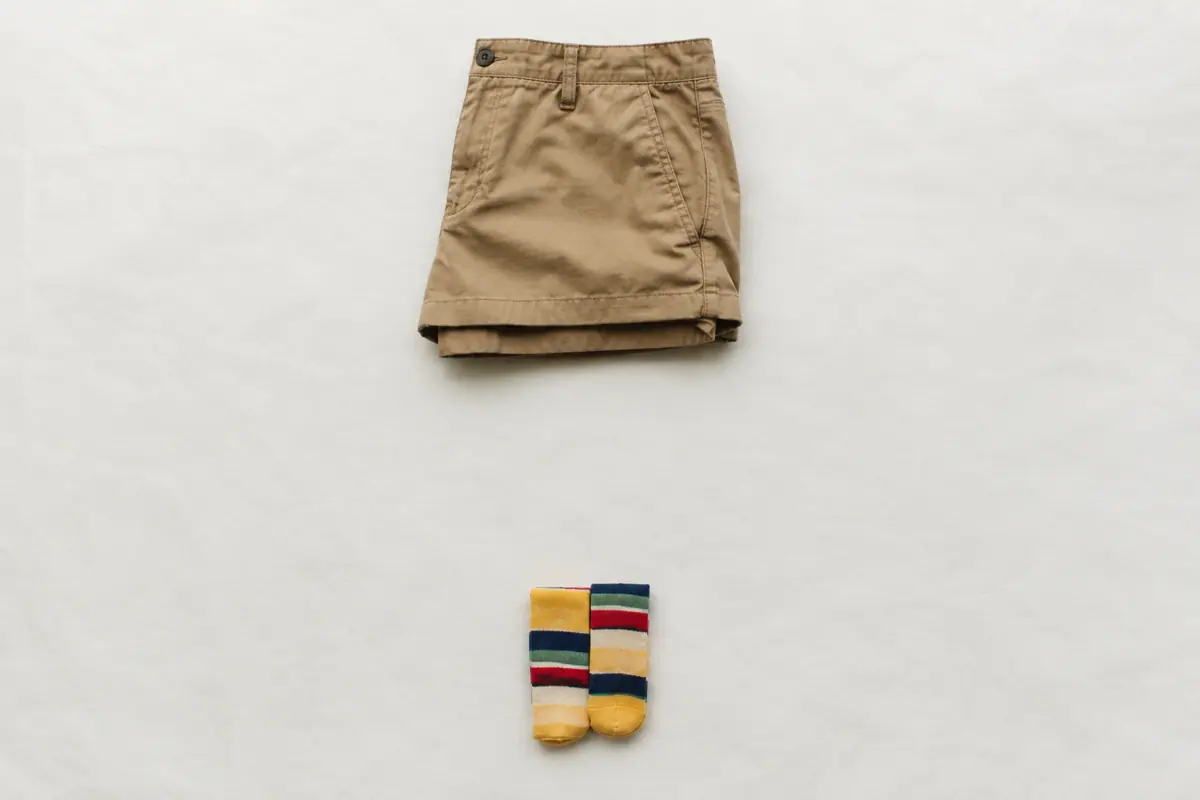
Above the sock there is a bare leg, not a trouser, so there is no colour to continue. The sock becomes a free-standing item and can be anything at all.
The rule almost nobody states
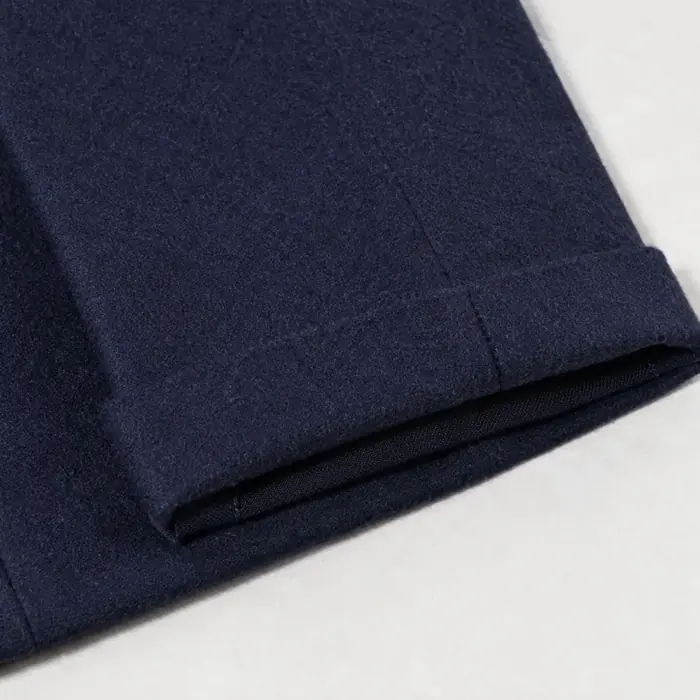
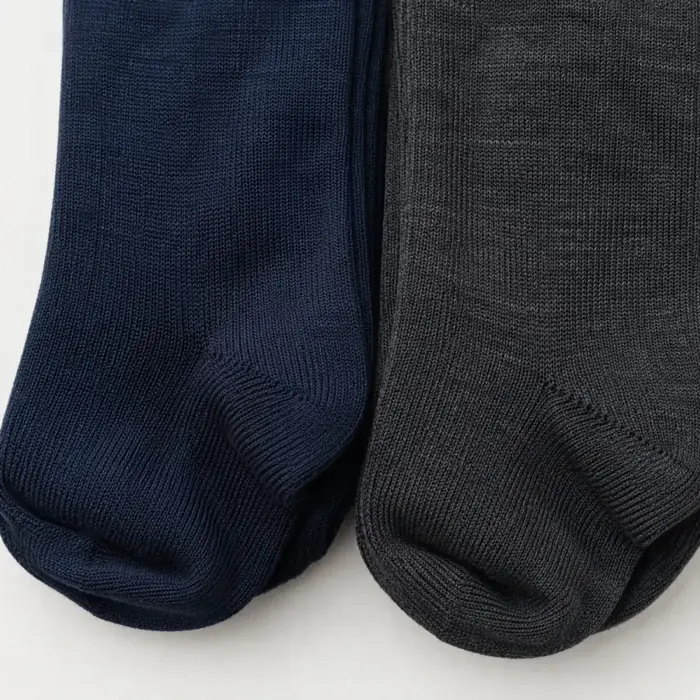
A sock is the only thing you wear that shows for one short stretch and shows conspicuously. There is a long-standing convention about that stretch, and it is simpler than it sounds: the sock continues the colour of the trouser, so the eye travels from hem to floor without stopping.
Match the shoe instead and a horizontal edge lands in the middle of the calf. The run is cut in two. Most people have never been told this, and almost everyone can see it the moment it is pointed at.
Three flat photographs. We look at the colours in sequence,
not at anyone’s legs.
Try it here — navy trousers, tan shoes, your choice of sock
No account needed
Reading
Stops at the ankle
Mid grey socks sit closer to the camel shoes than to the navy trousers, so a horizontal edge lands mid-calf. The eye stops there, and the run from hem to floor is cut into two.
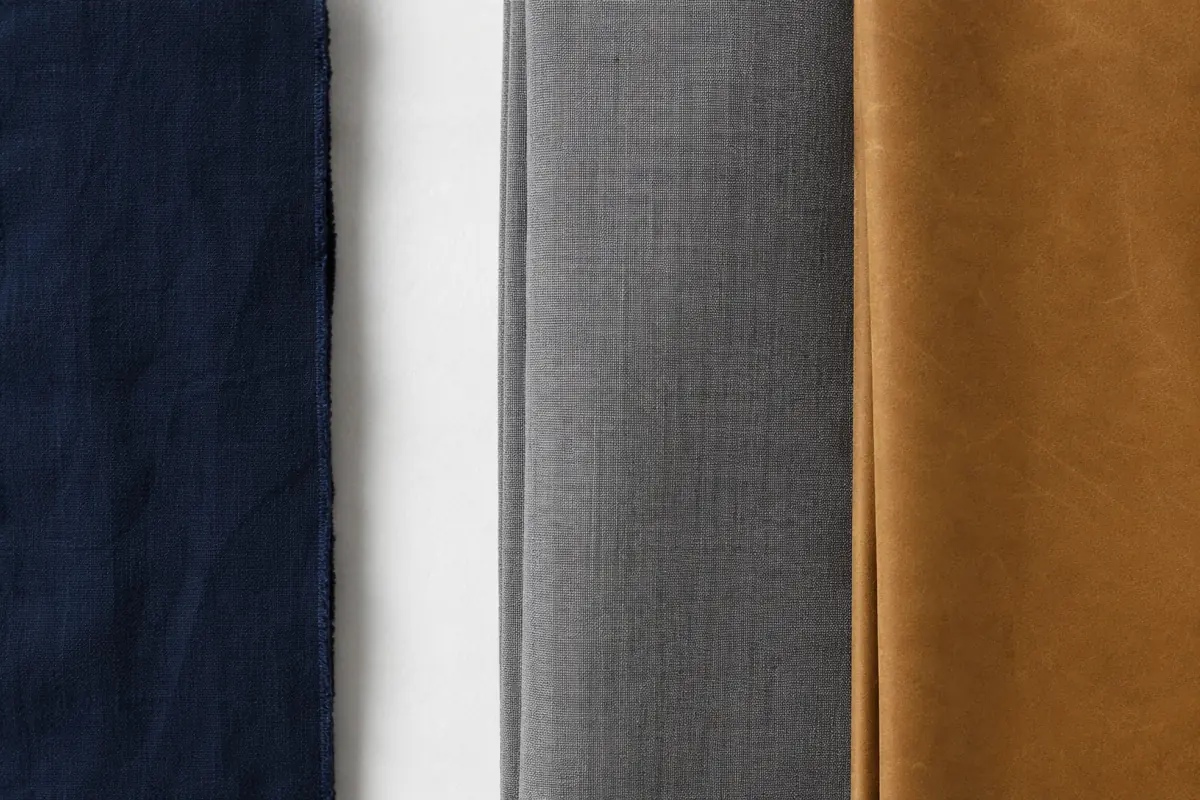
Top band, trousers: Navy. Middle band, socks: Mid grey. Bottom band, shoes: Camel. Trousers to socks: one of the two is a neutral, so there is no hue difference to measure, lightness moves 18 points. Far enough apart to register as an edge. Socks to shoes: one of the two is a neutral, so there is no hue difference to measure, lightness moves 14 points. The two sit close, so no edge forms. A break marker sits between the trouser band and the sock band.
§ 01 — The convention
01 / What it says
Not to the shoe, and not to the shirt. If the sock sits close to the trouser in colour and in lightness, the leg reads as one continuous length and the shoe reads as a separate object, which is what it is.
This is why navy socks with navy trousers is such a reliable answer, and why it is so dull to be told it.
02 / Why it works
Vision finds boundaries before it finds anything else. Where two adjacent colours are far enough apart in hue or in lightness, a line appears at the join whether or not anyone drew one.
Put that line halfway down the calf and it becomes the most noticeable thing below the waist. Put it at the shoe, where a change is expected anyway, and nobody registers it at all.
03 / Where it stops
It describes what the eye does. It does not decide what you should wear, and this site never says a sequence is wrong — only that it runs, that it breaks, or that it reads as deliberate.
And it has real edges. In several perfectly ordinary situations it does not apply at all, which is the first thing we work out.
§ 02 — The same trousers, the same shoes
Navy trousers above, tan shoes below, in both figures. On the left the sock continues the trouser and there is nothing to mark. On the right the sock has moved towards the shoe, and an edge appears where the marker sits.
The marker is a drawn shape with a written label, never a colour. The whole figure is already colour, and colour cannot be the material and the finding at the same time.
Fig. 02a — Navy sock
Runs straight down
Trousers to socks: hue moves 0°, lightness moves 0. No edge forms. The change that does happen is at the shoe, where a change is expected.
Fig. 02b — Camel sock
Stops at the ankle
Trousers to socks: hue moves 32°, lightness moves 33. Far enough apart to register as an edge, and it lands mid-calf.
§ 03 — How a reading is made
Step 01
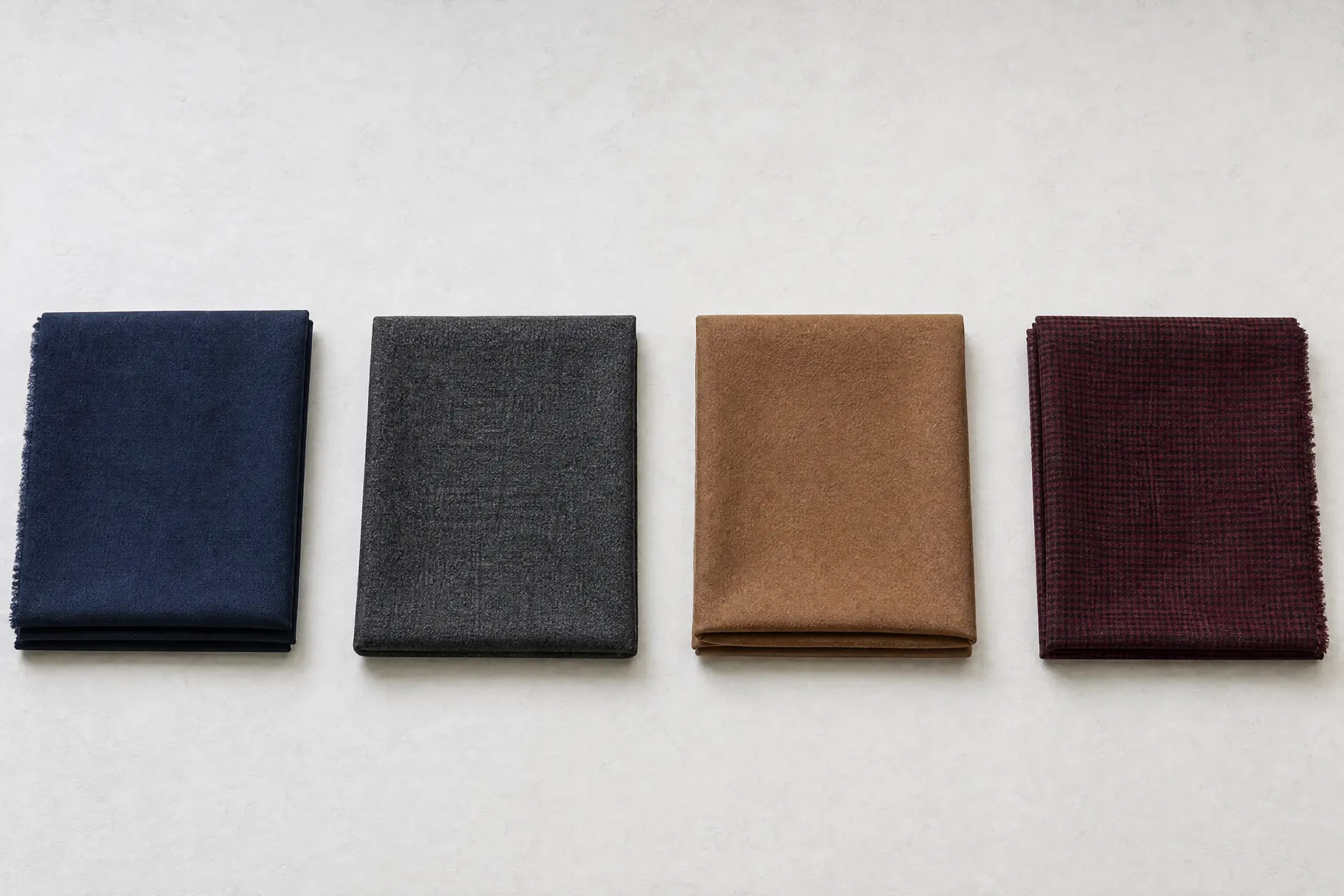
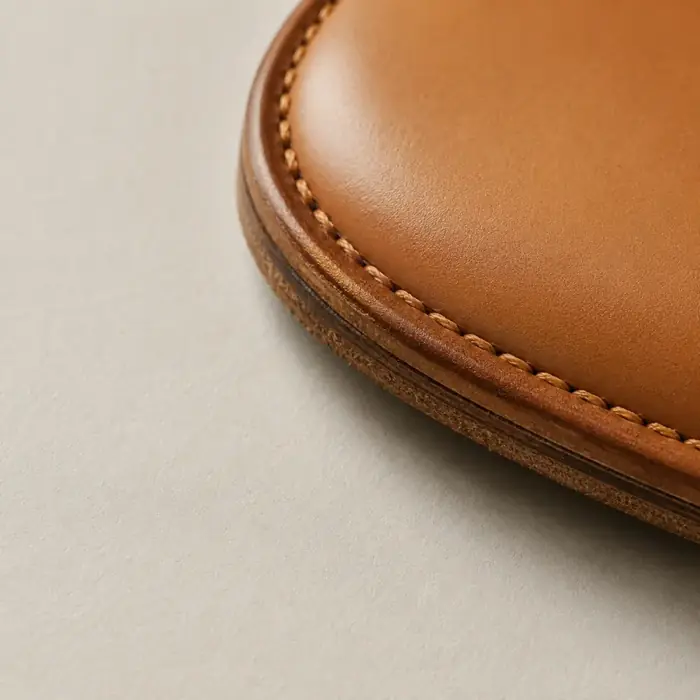
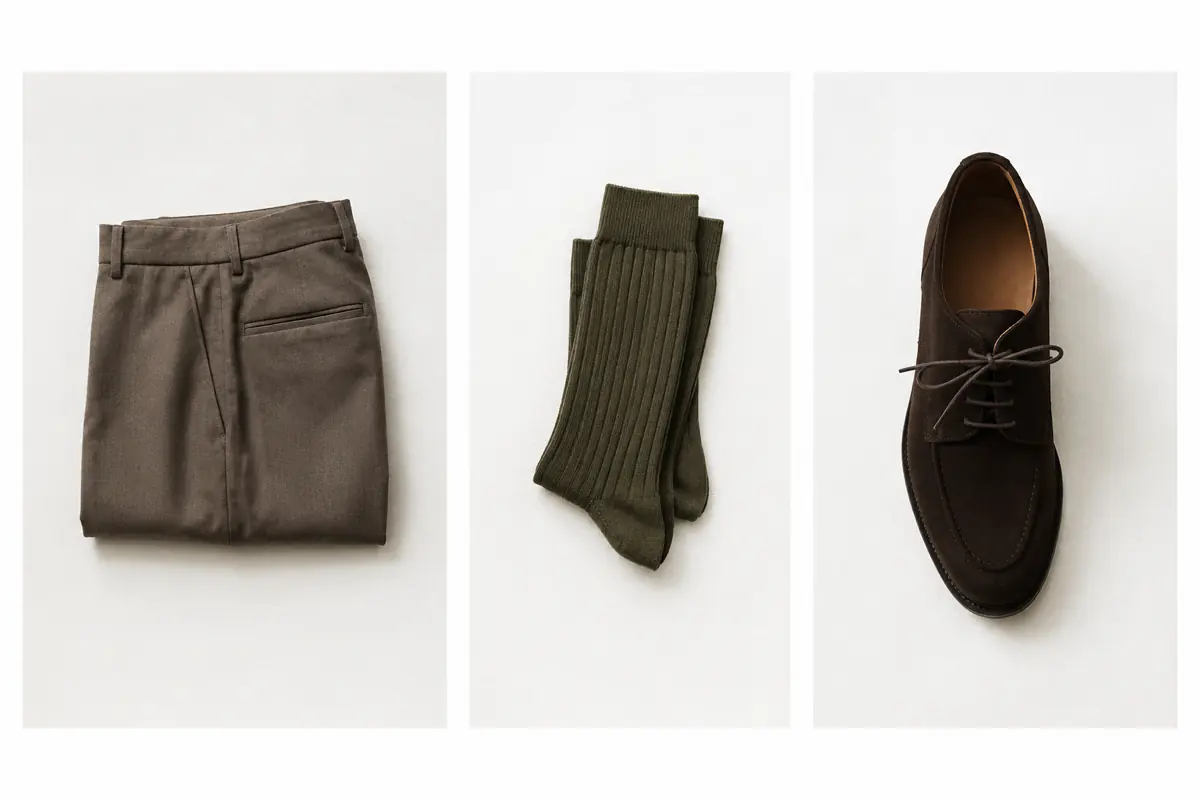
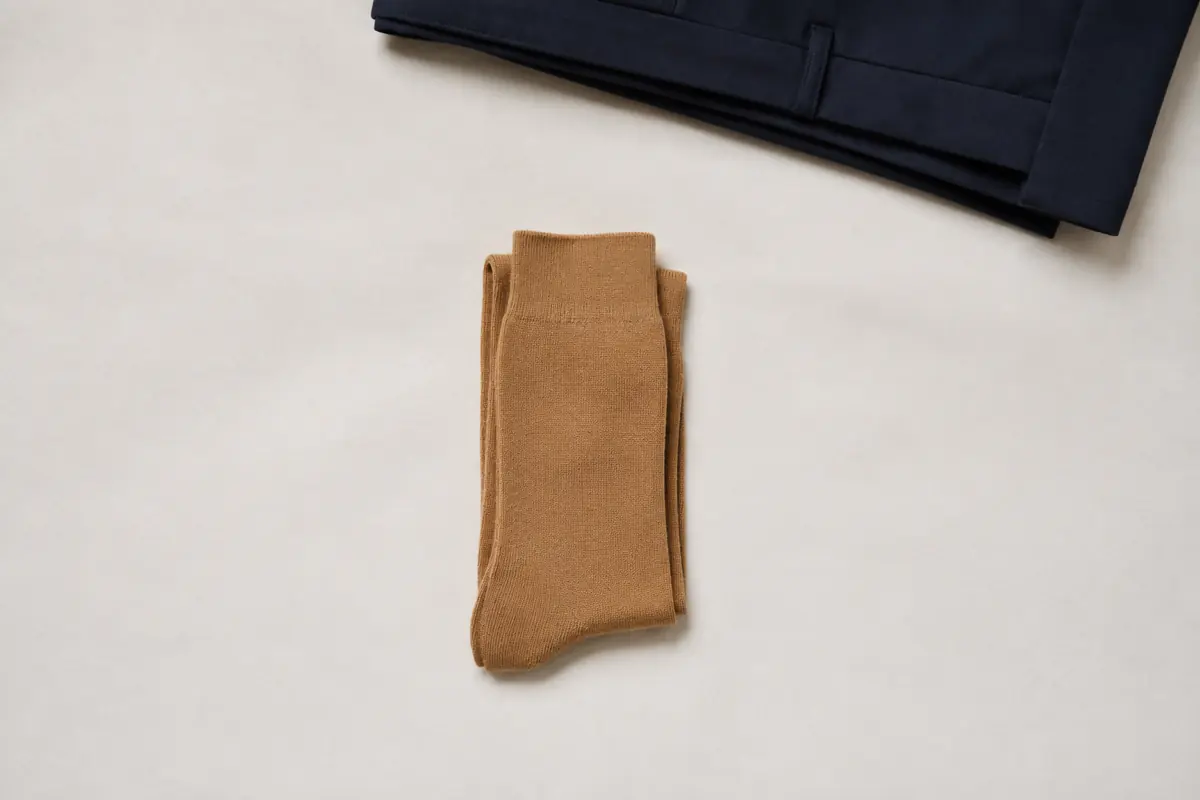
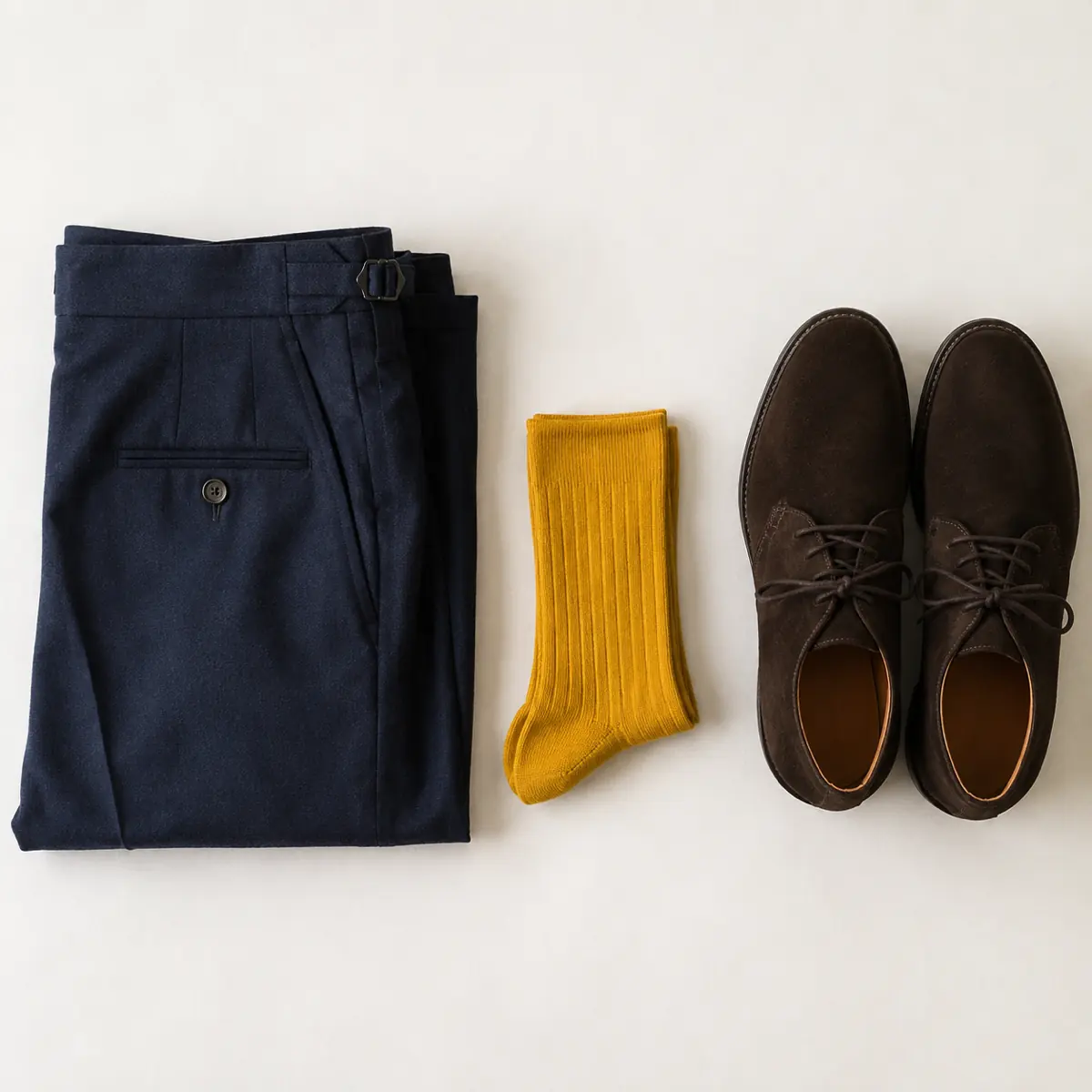
Trousers, socks, shoes — laid flat, one at a time, on any plain surface. Nothing worn, nothing on anyone. Say where you are going in a sentence.
 01
Step 02
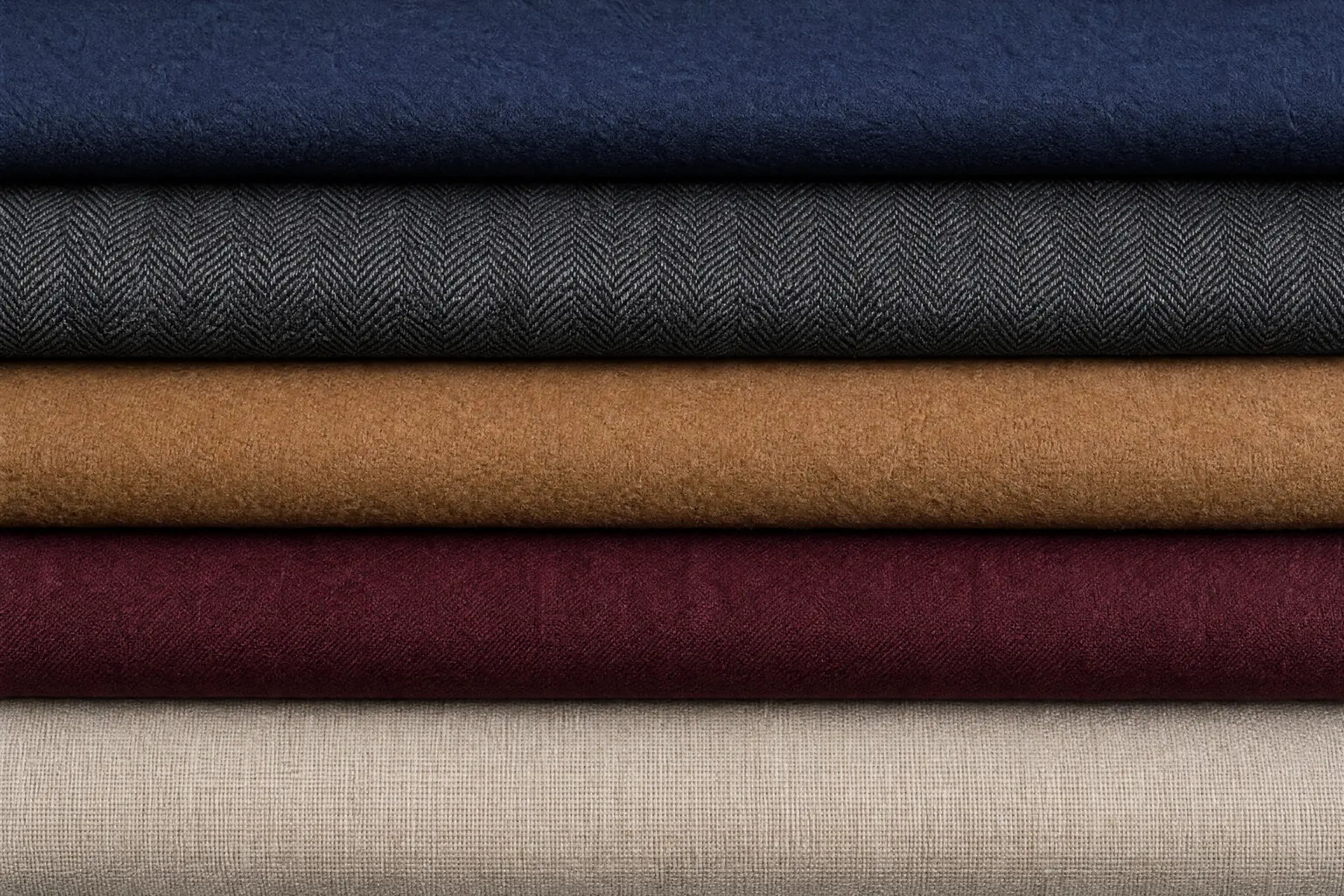
We take the dominant colour, the lightness and the surface of each item. Your browser does the arithmetic and shows you the numbers it used.
 02
Step 03
If it runs, you are done. If it breaks, you see which junction. And if you want the loud sock anyway, there is a route for making it read as a decision.
 03
§ 04 — Six occasions
Whether the rule operates is worked out before any verdict exists. Where it does not, none is produced.
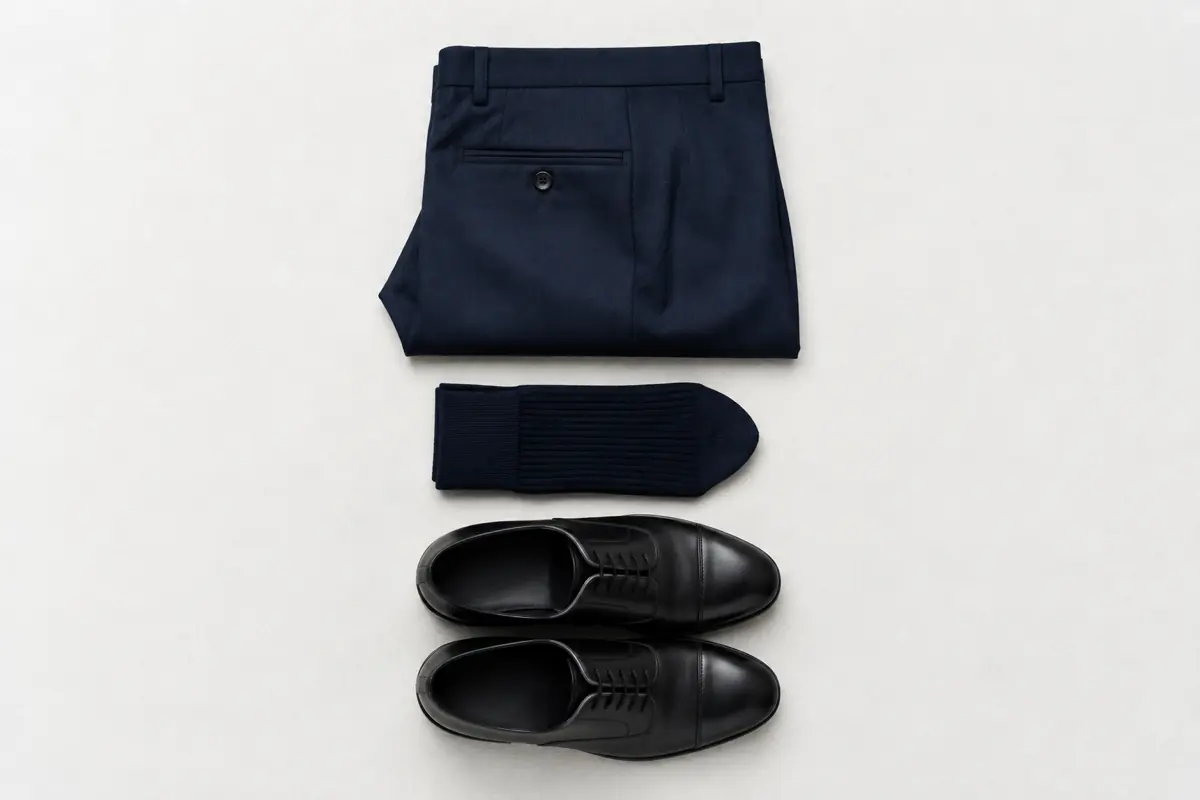 Rule applies
Business
Tailored trousers, a leather shoe. The run from hem to floor is there to protect.
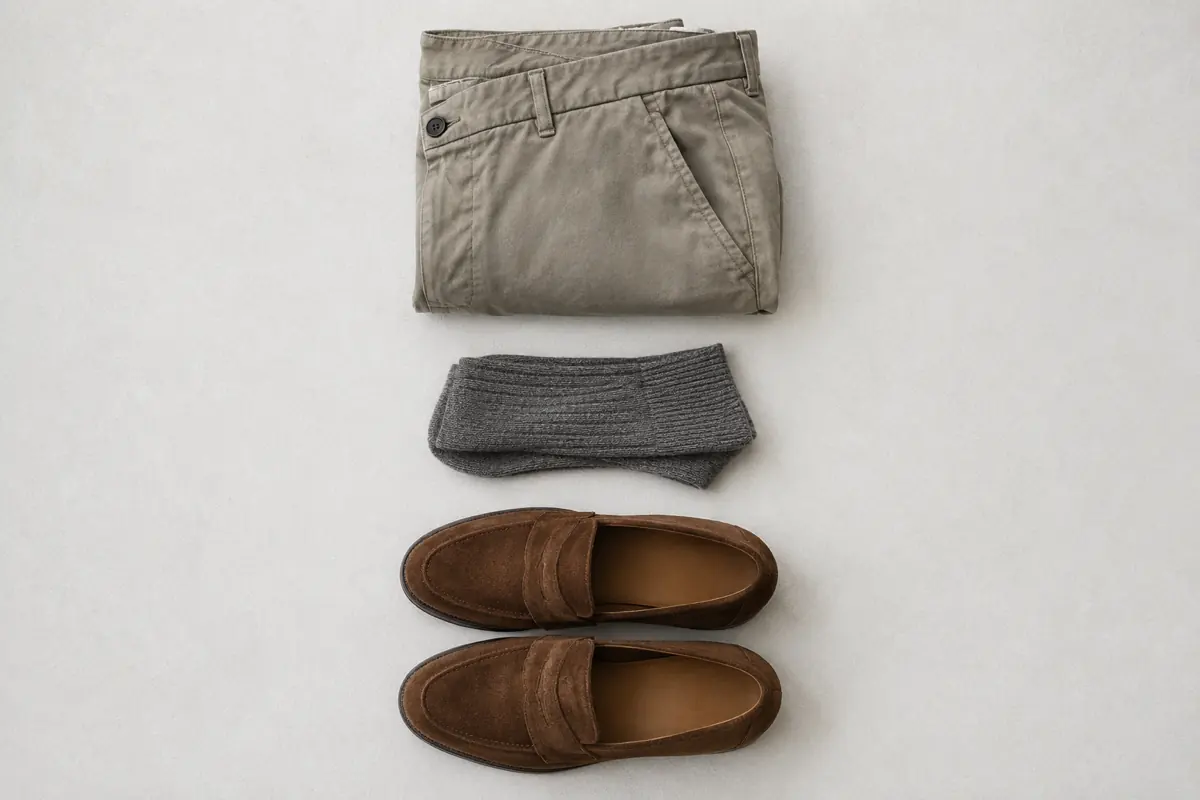 Rule applies
Smart casual
Chinos or wool trousers with a shoe that is not a trainer. The reading holds.
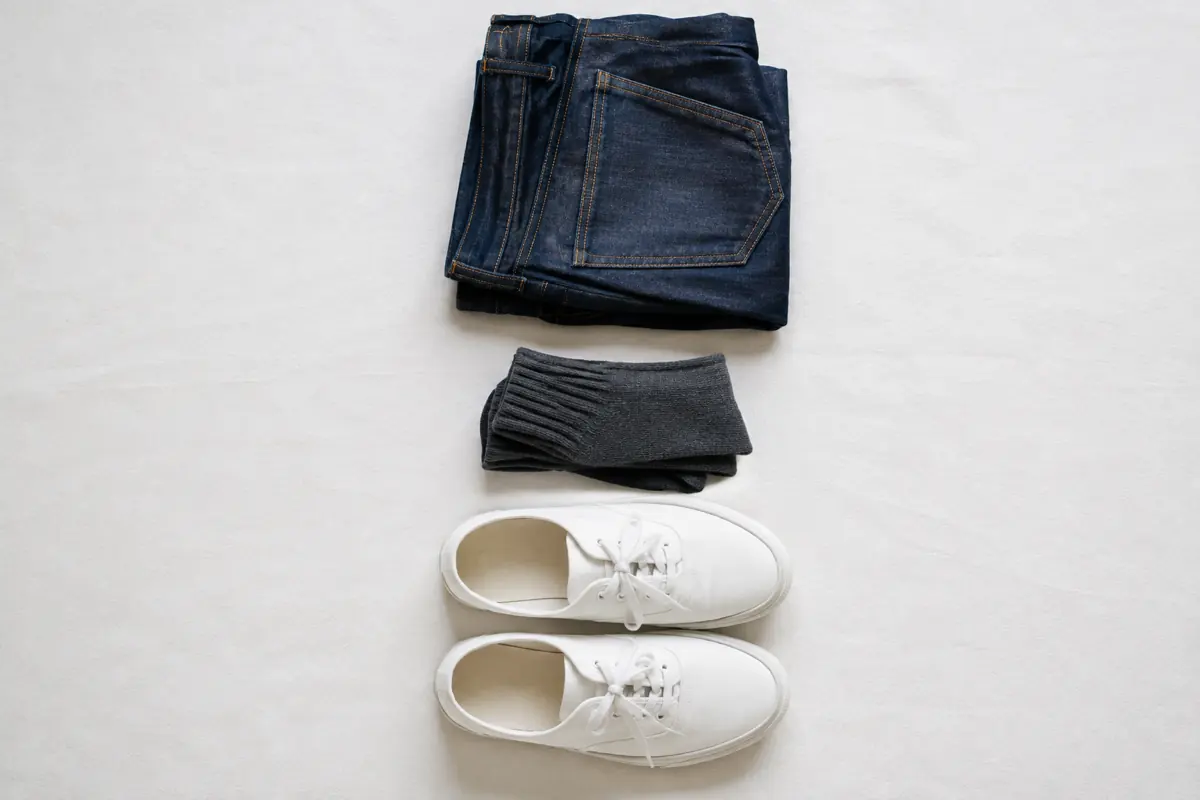 Rule applies
Casual
Jeans, cords, anything on the foot. Still a sequence, still readable.
 Rule does not apply
Shorts
No trouser above the sock, so no colour to continue. The sock is a free-standing item.
 Rule does not apply
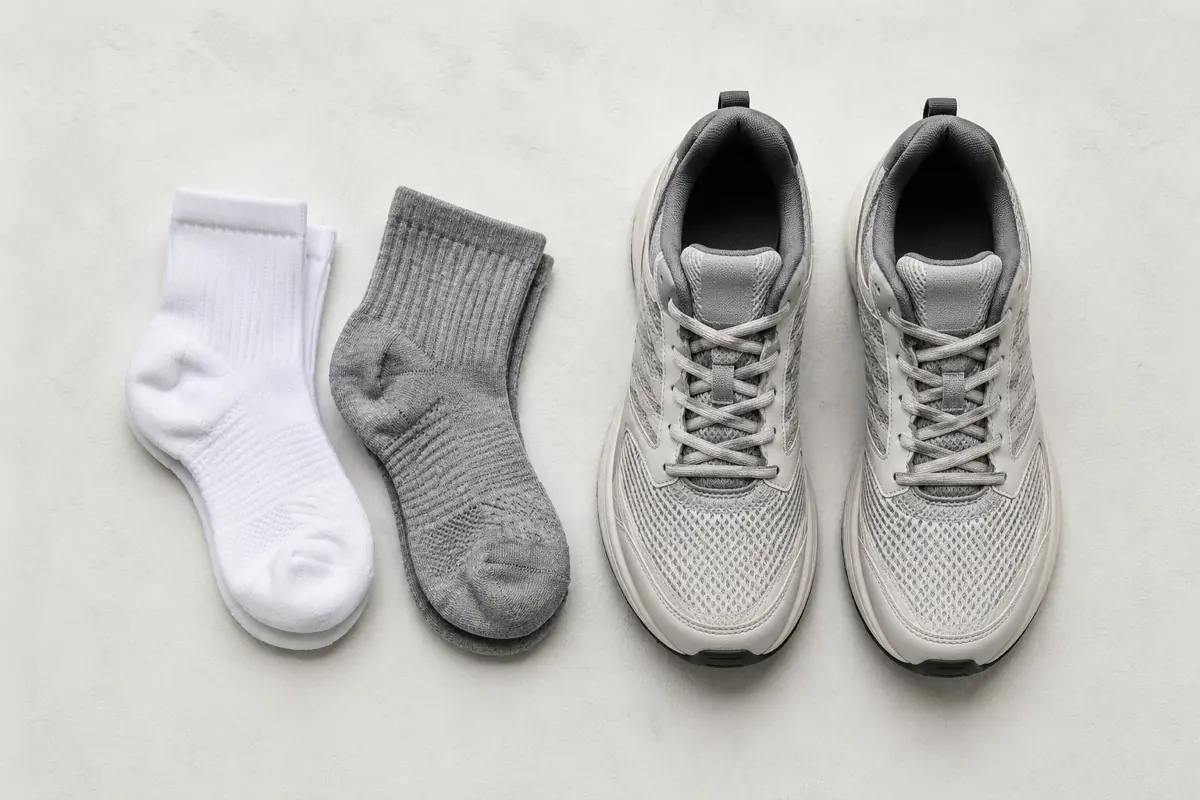
Sport
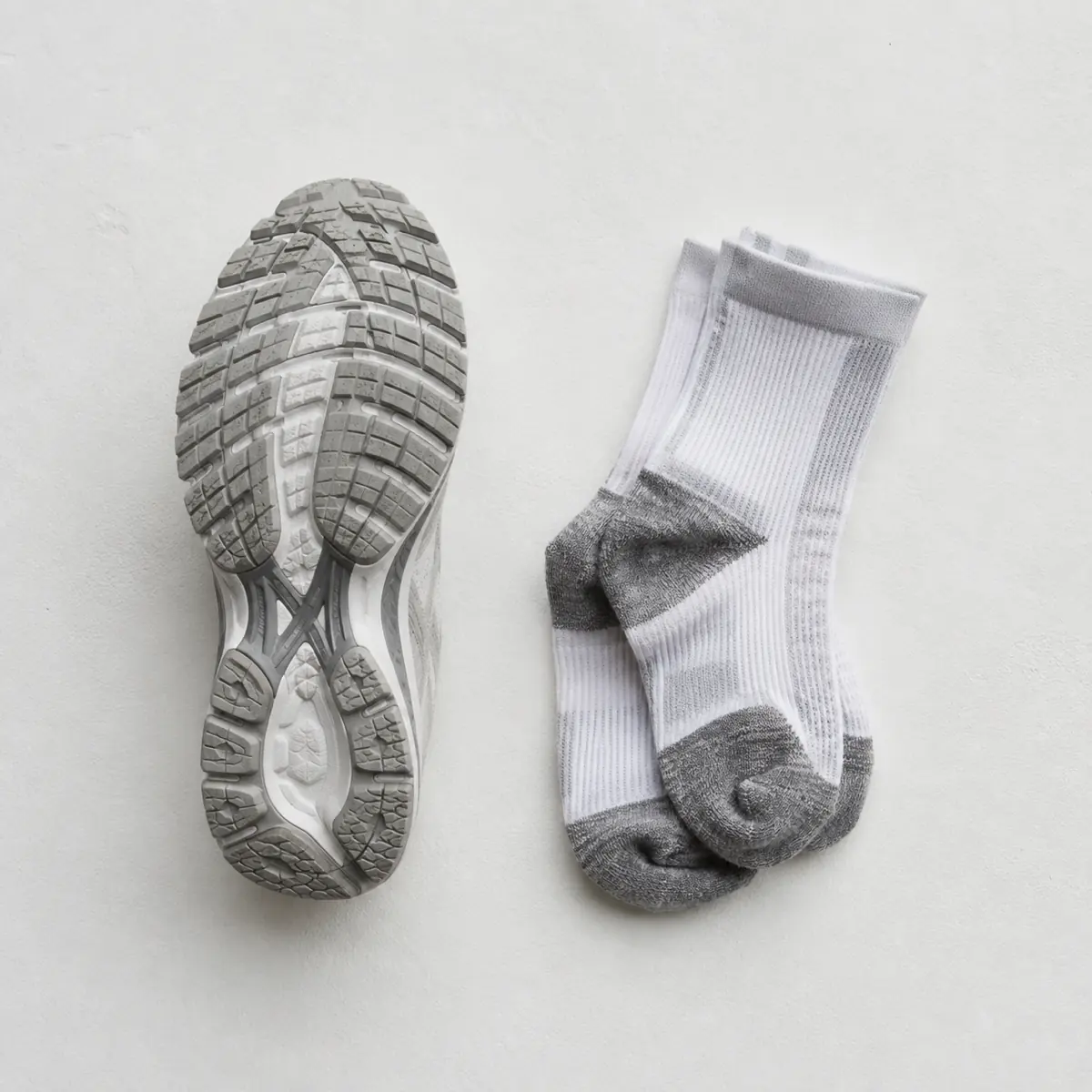
Cushioning, height and moisture decide the sock. Colour follows from those.
 Rule does not apply
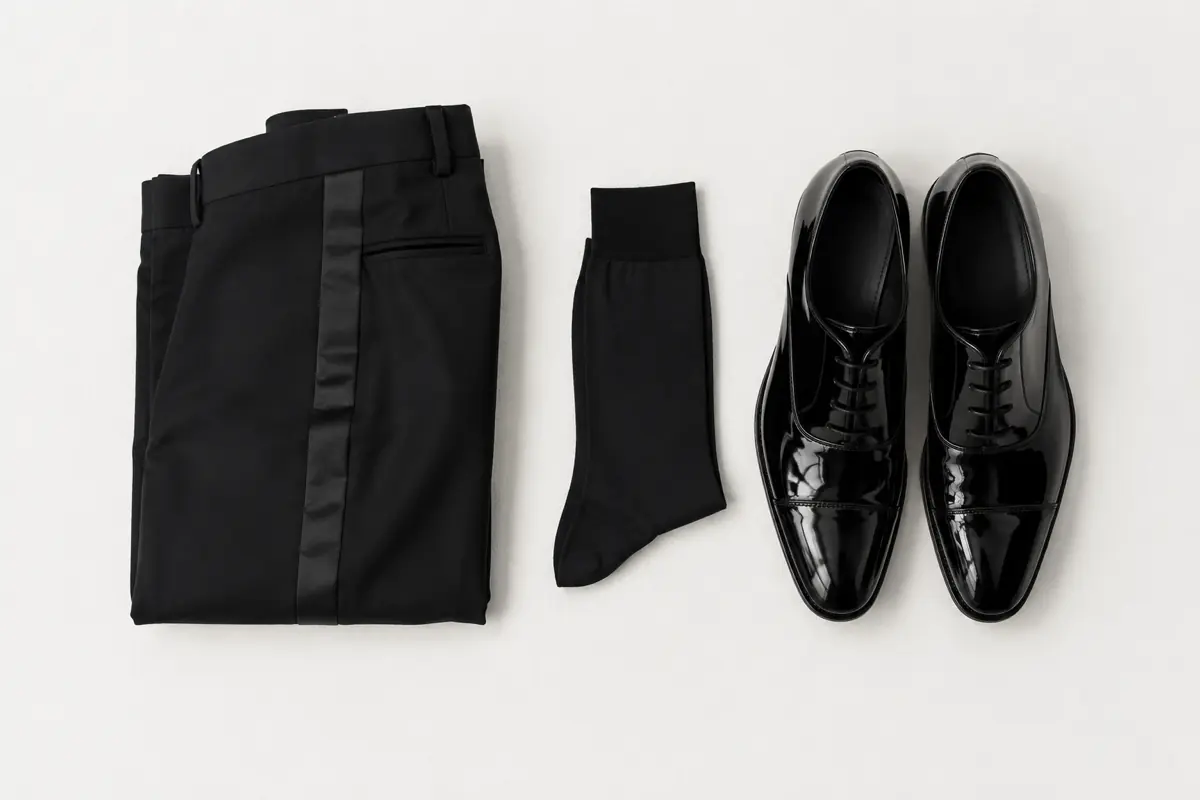
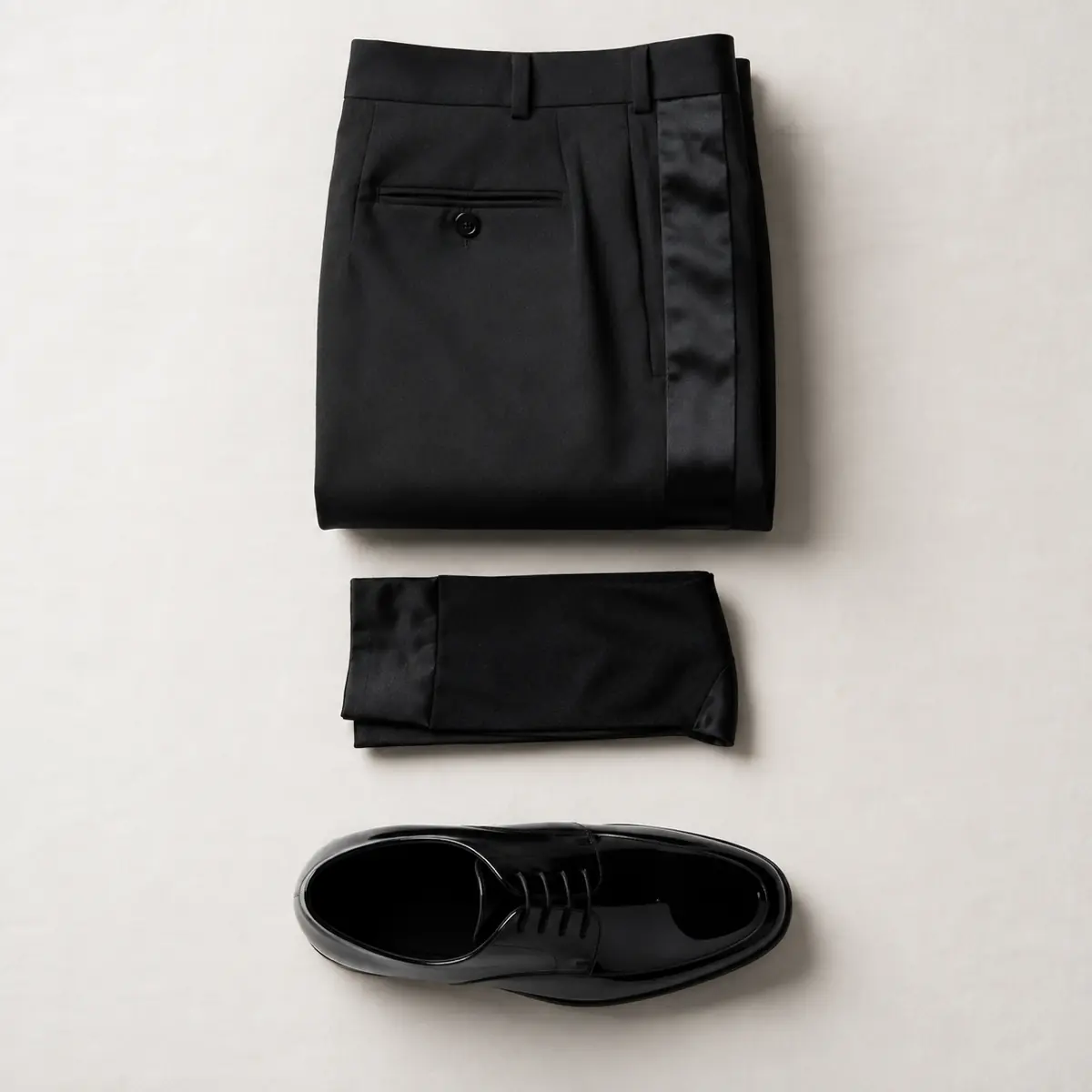
Black tie
A fixed requirement of its own sits above any reading of continuity.
§ 05 — Sequences, flat
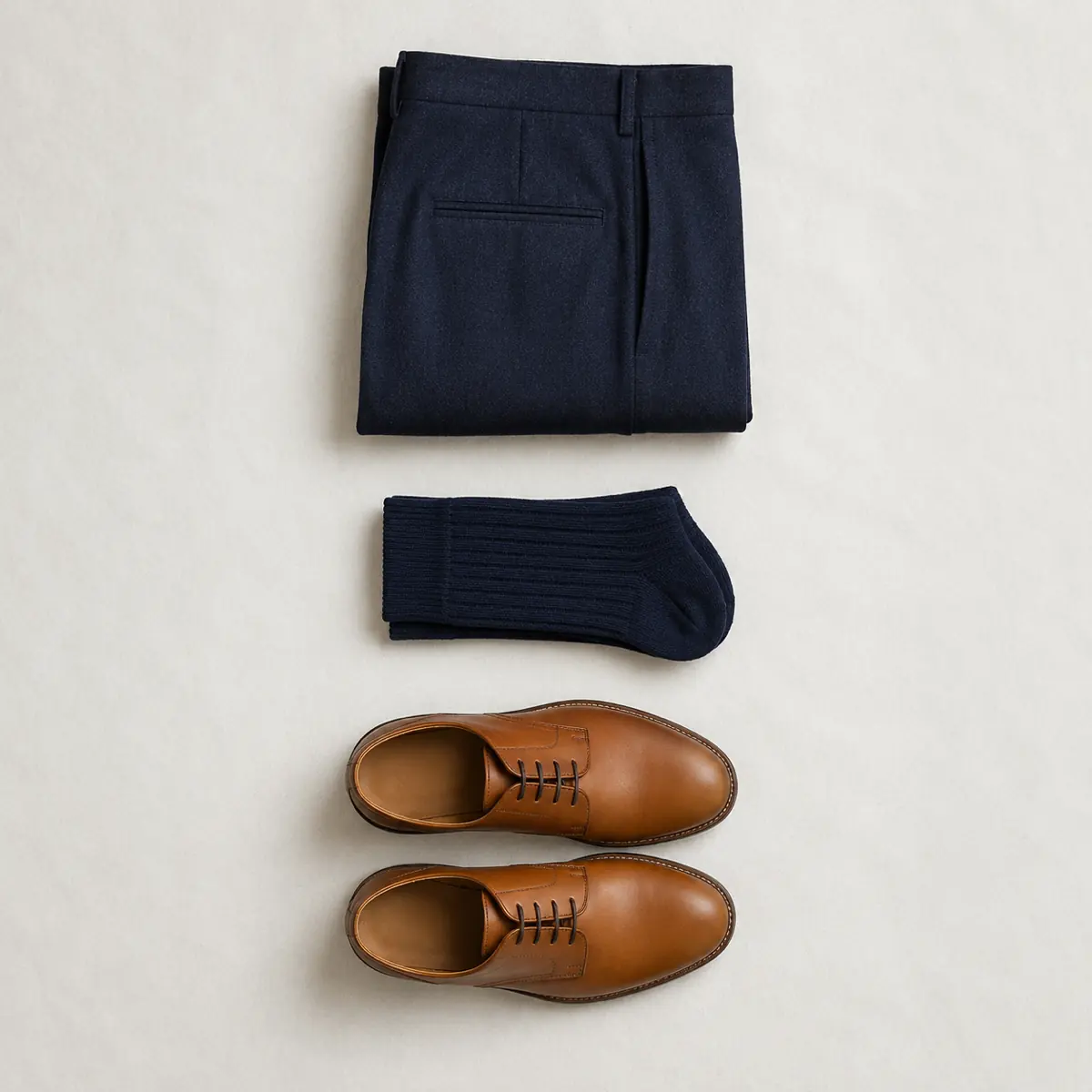
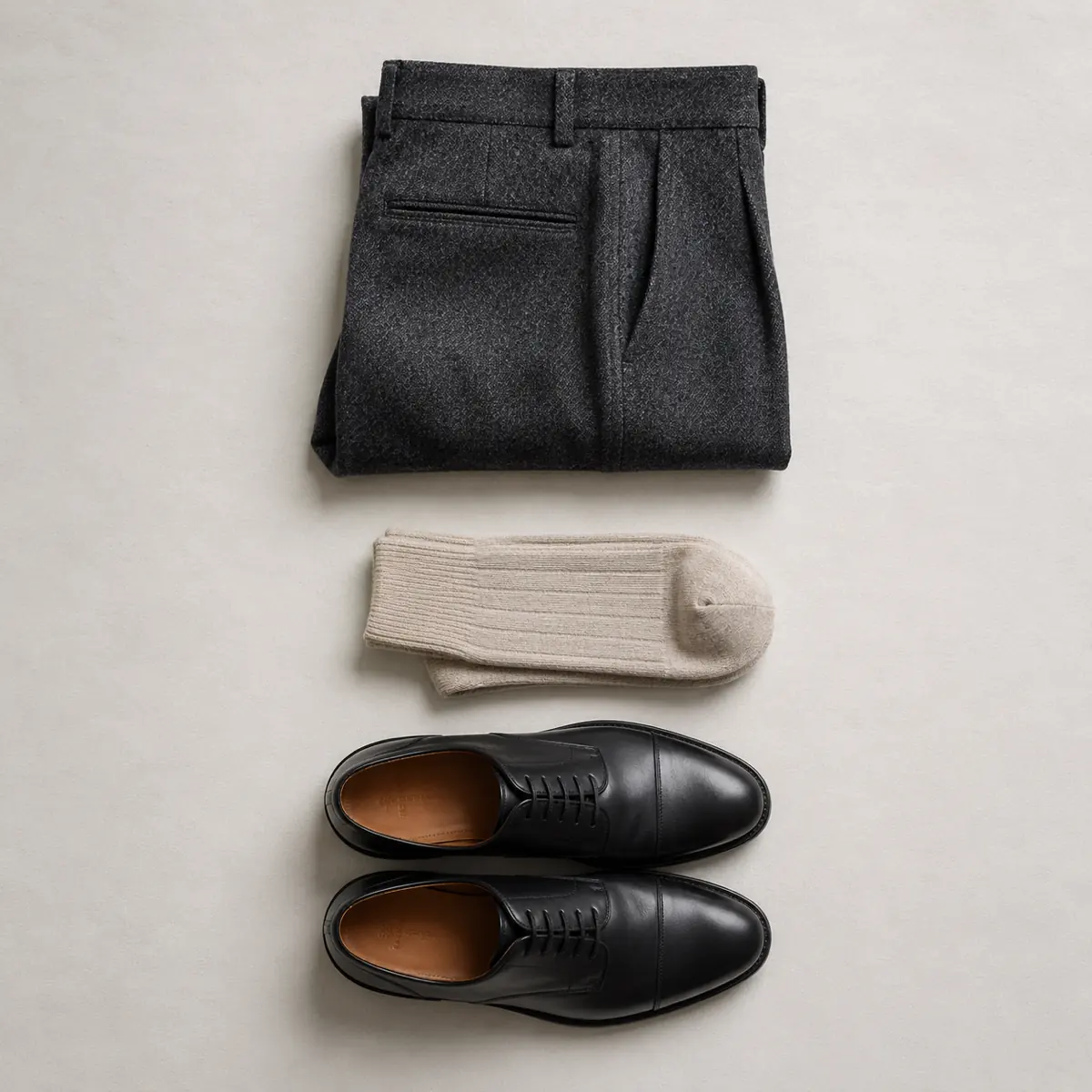
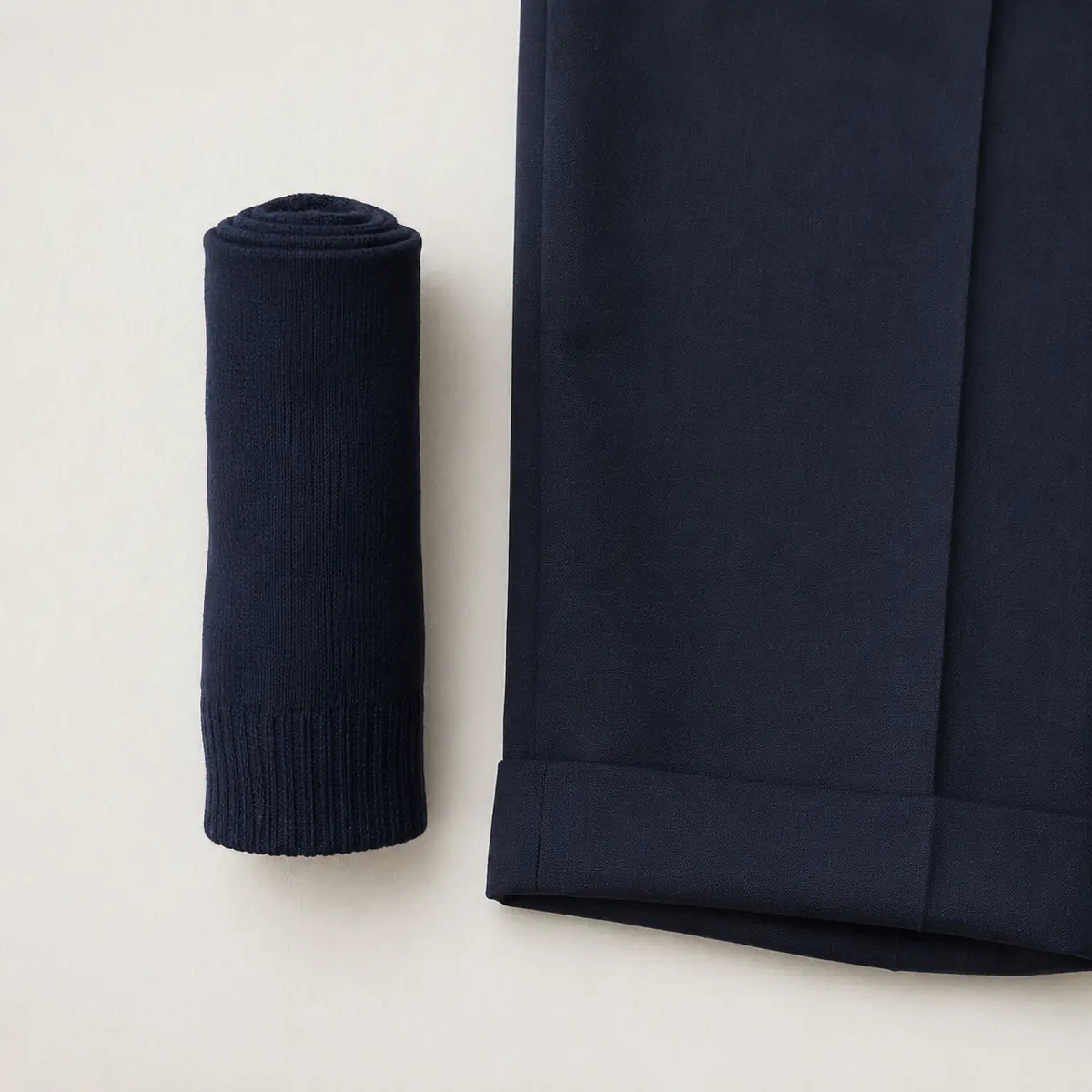
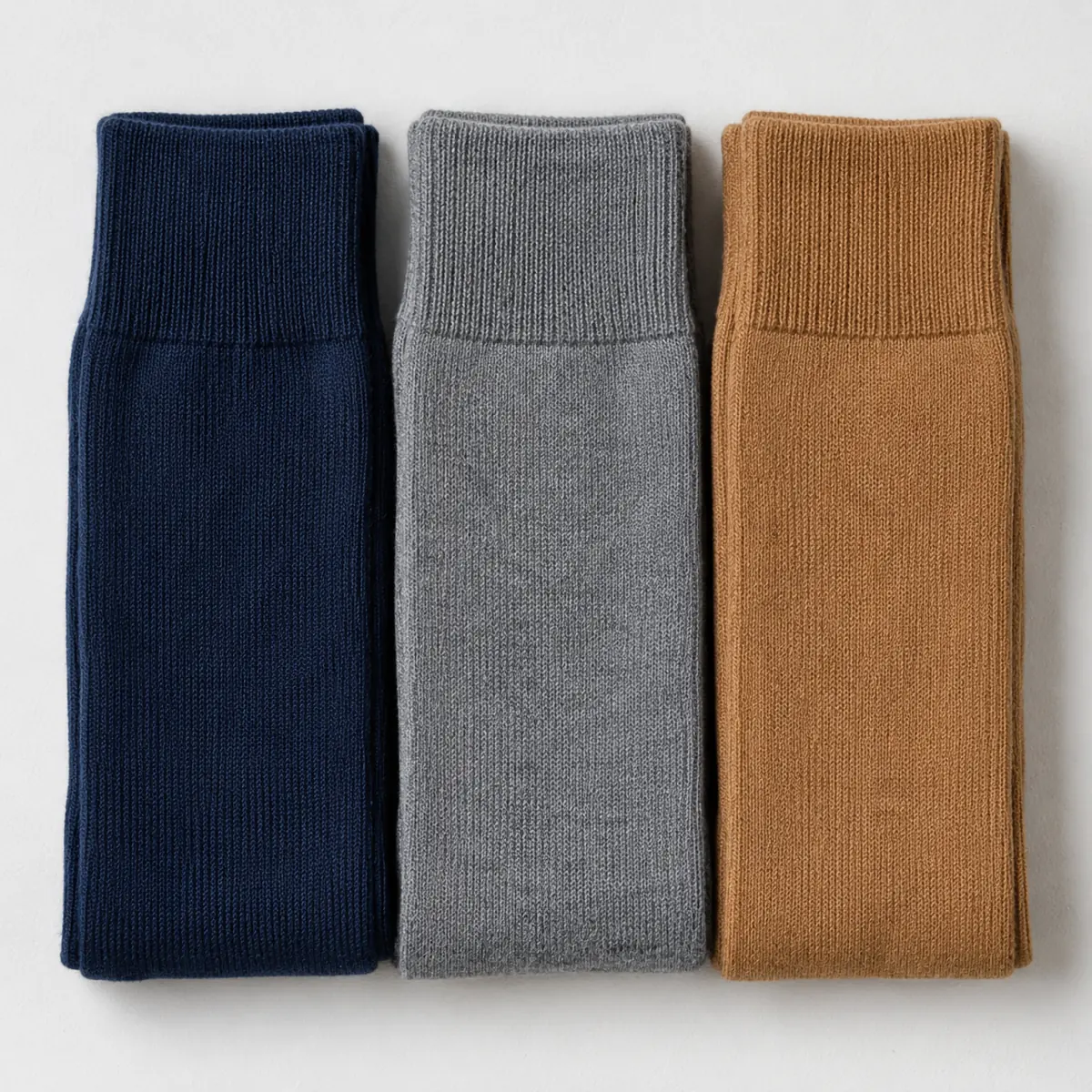
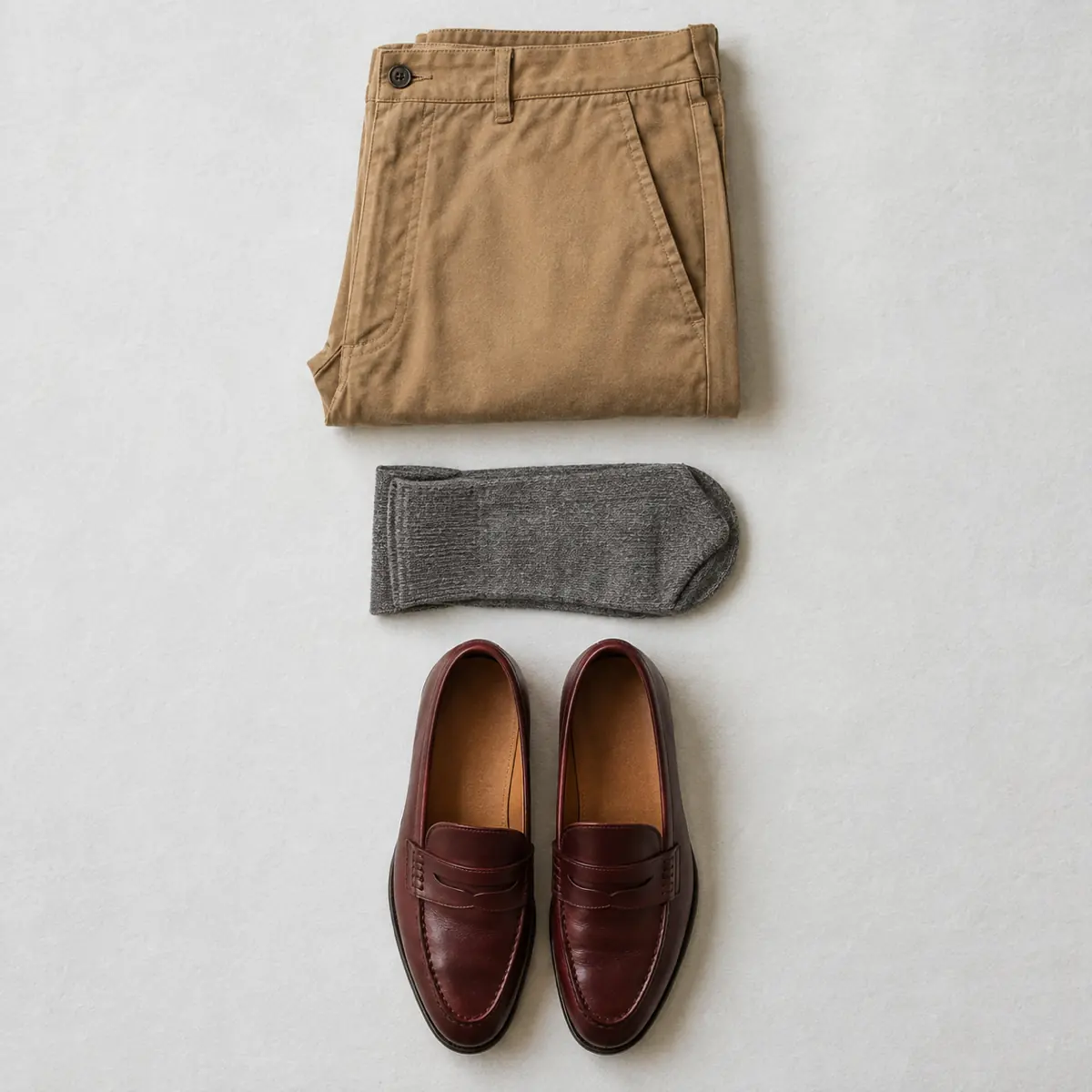
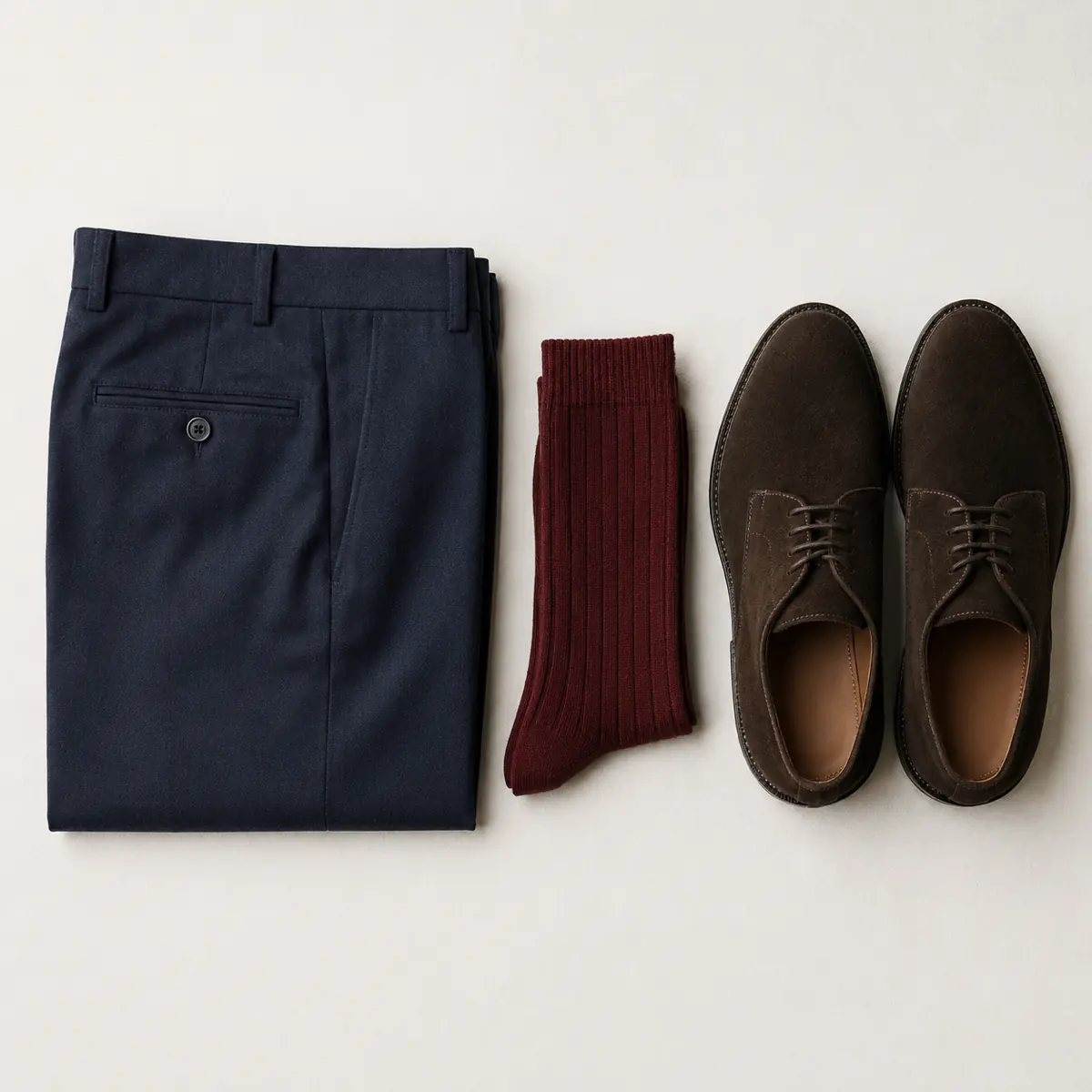
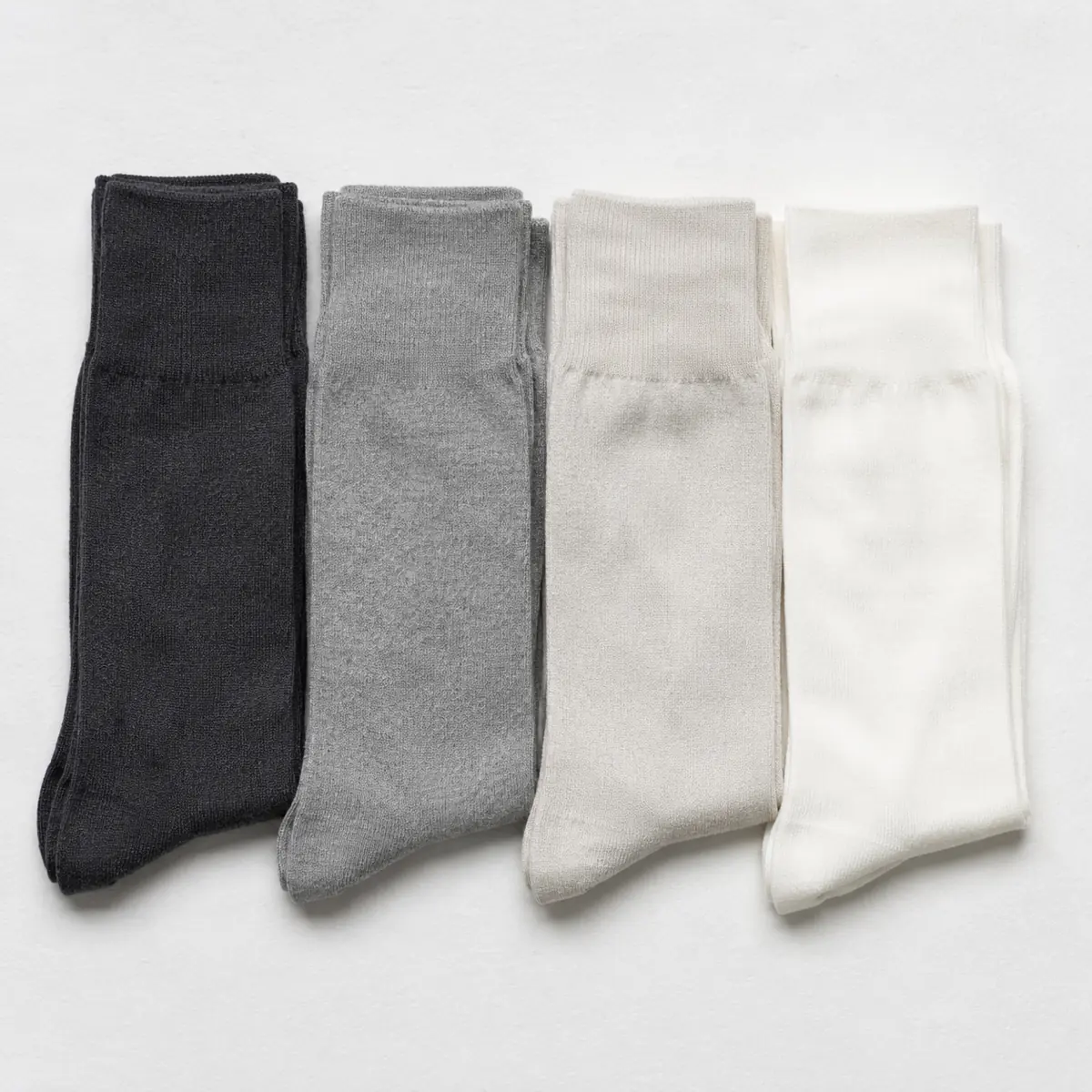
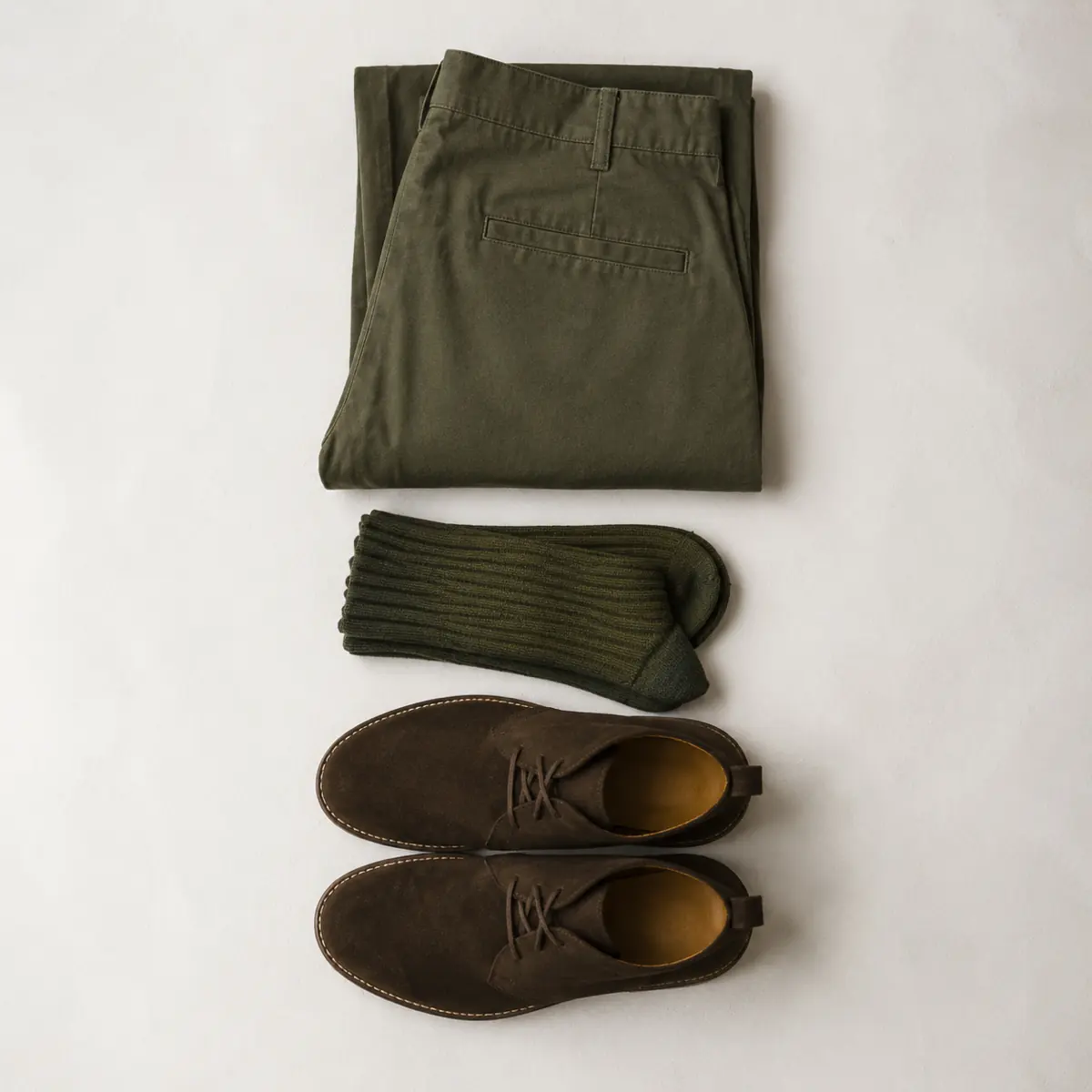
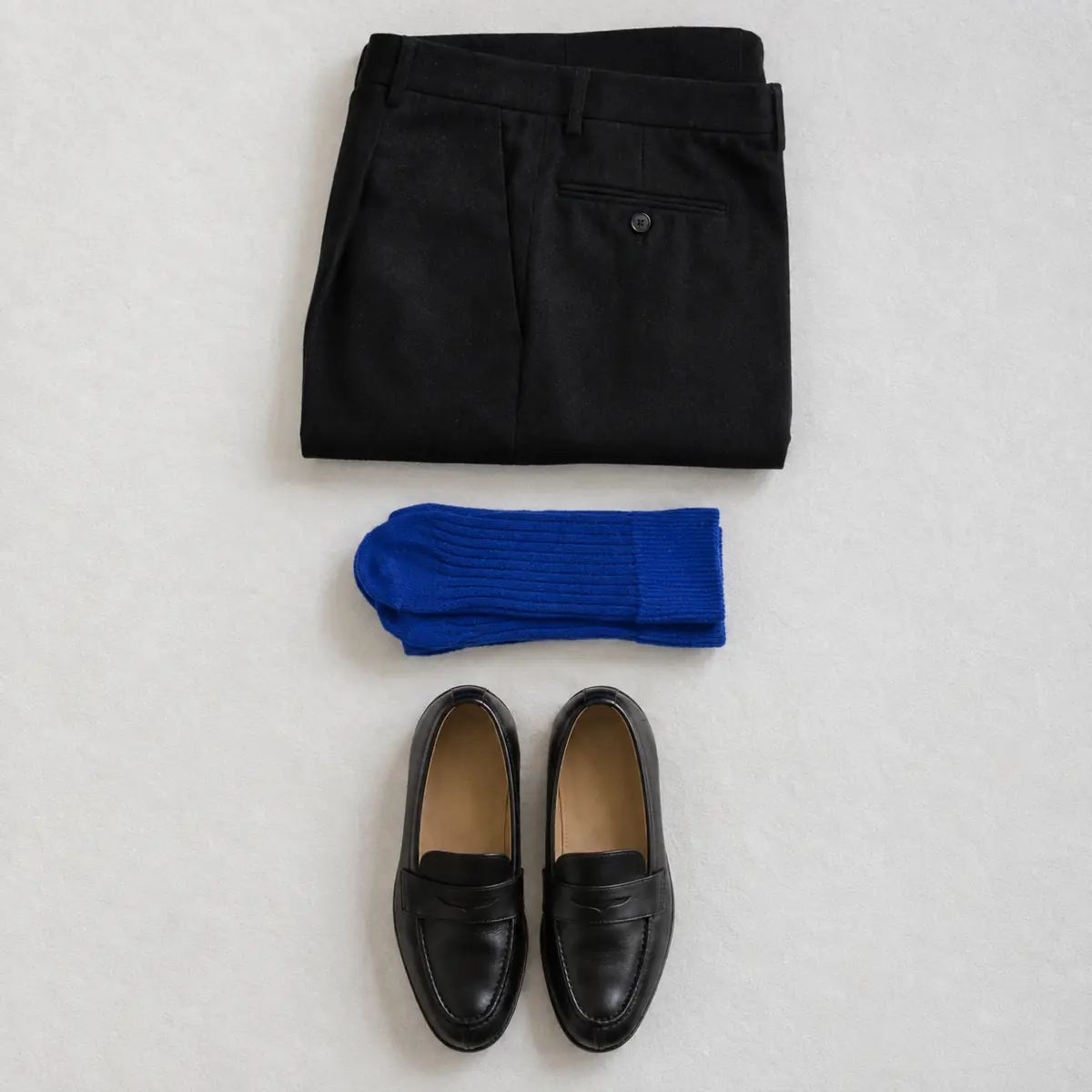
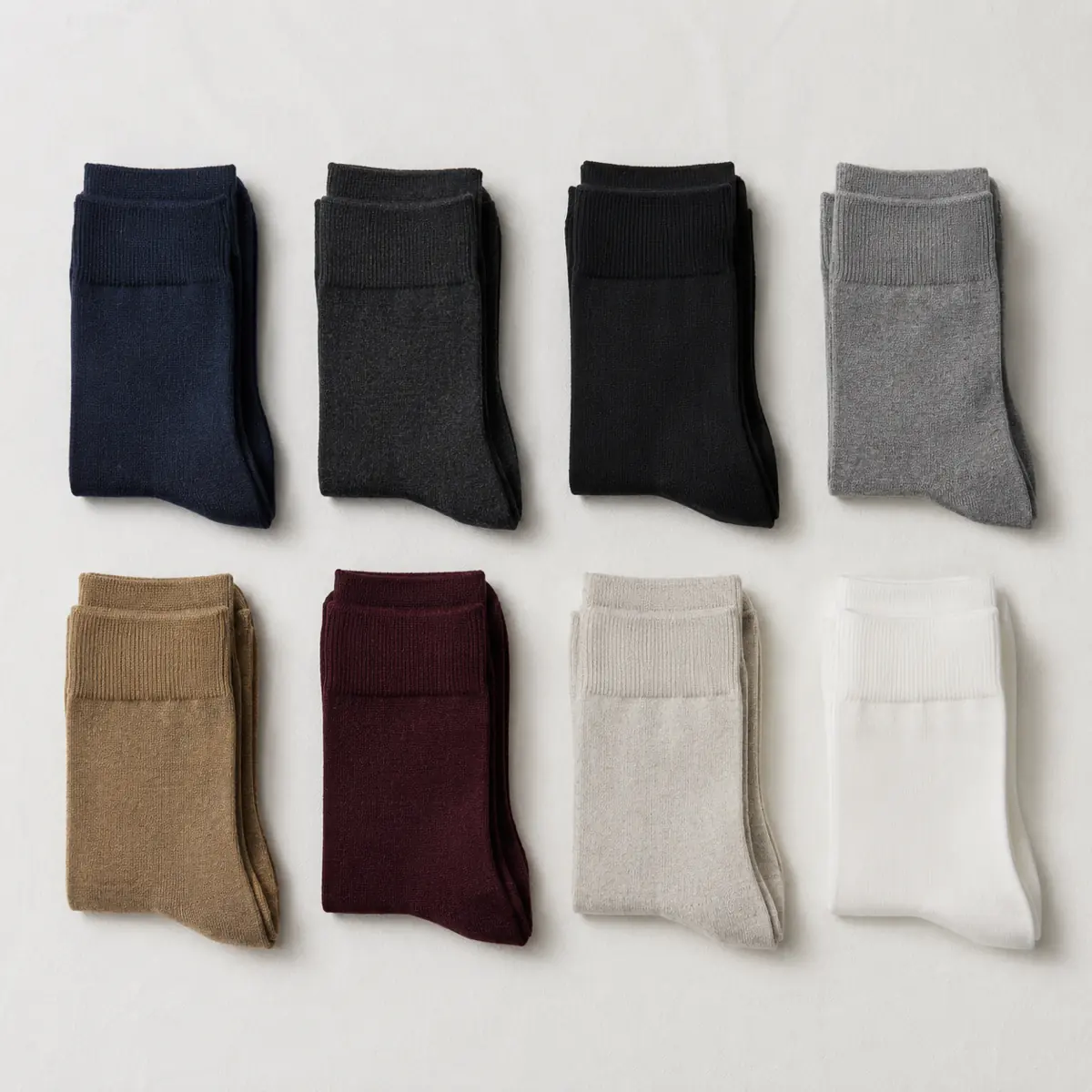
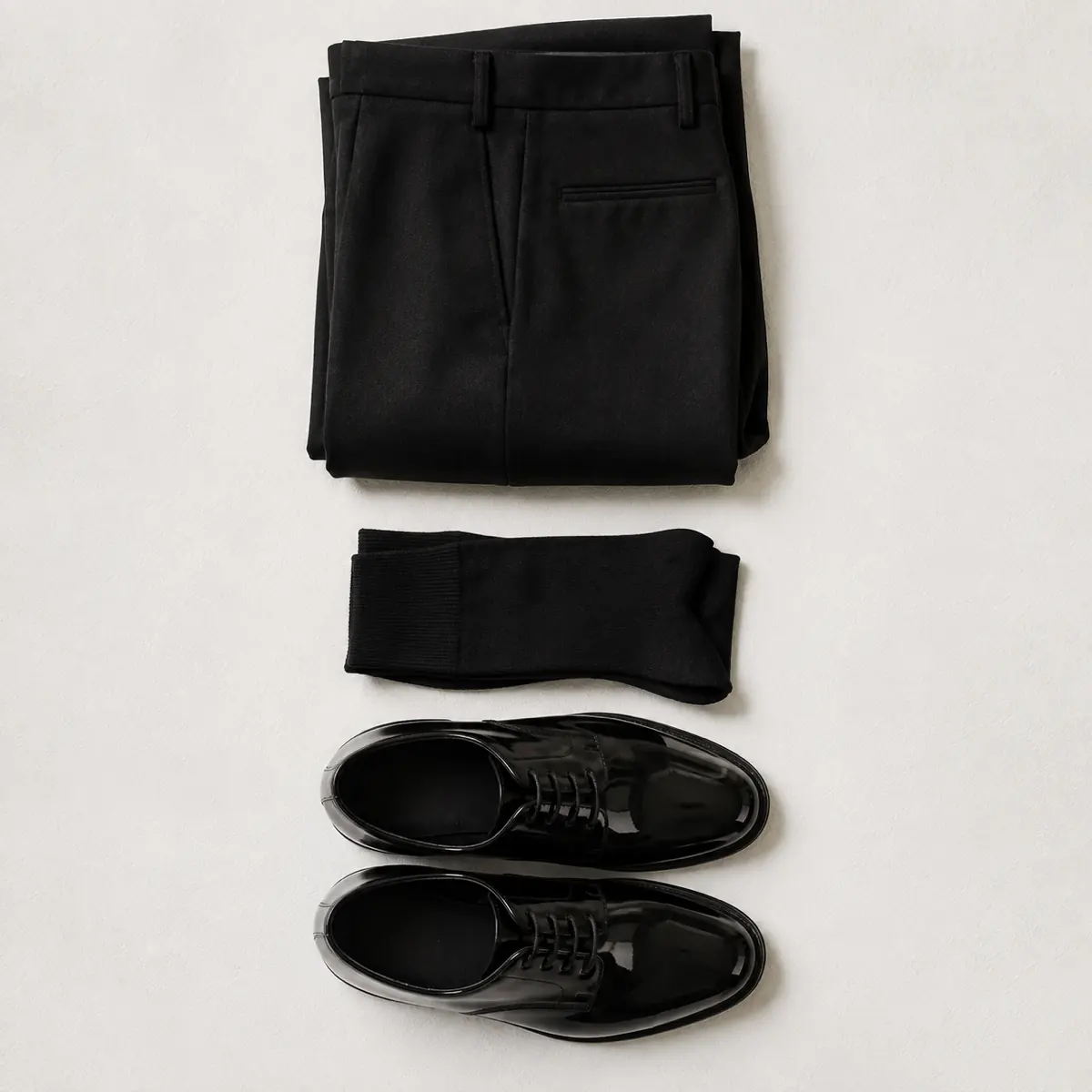
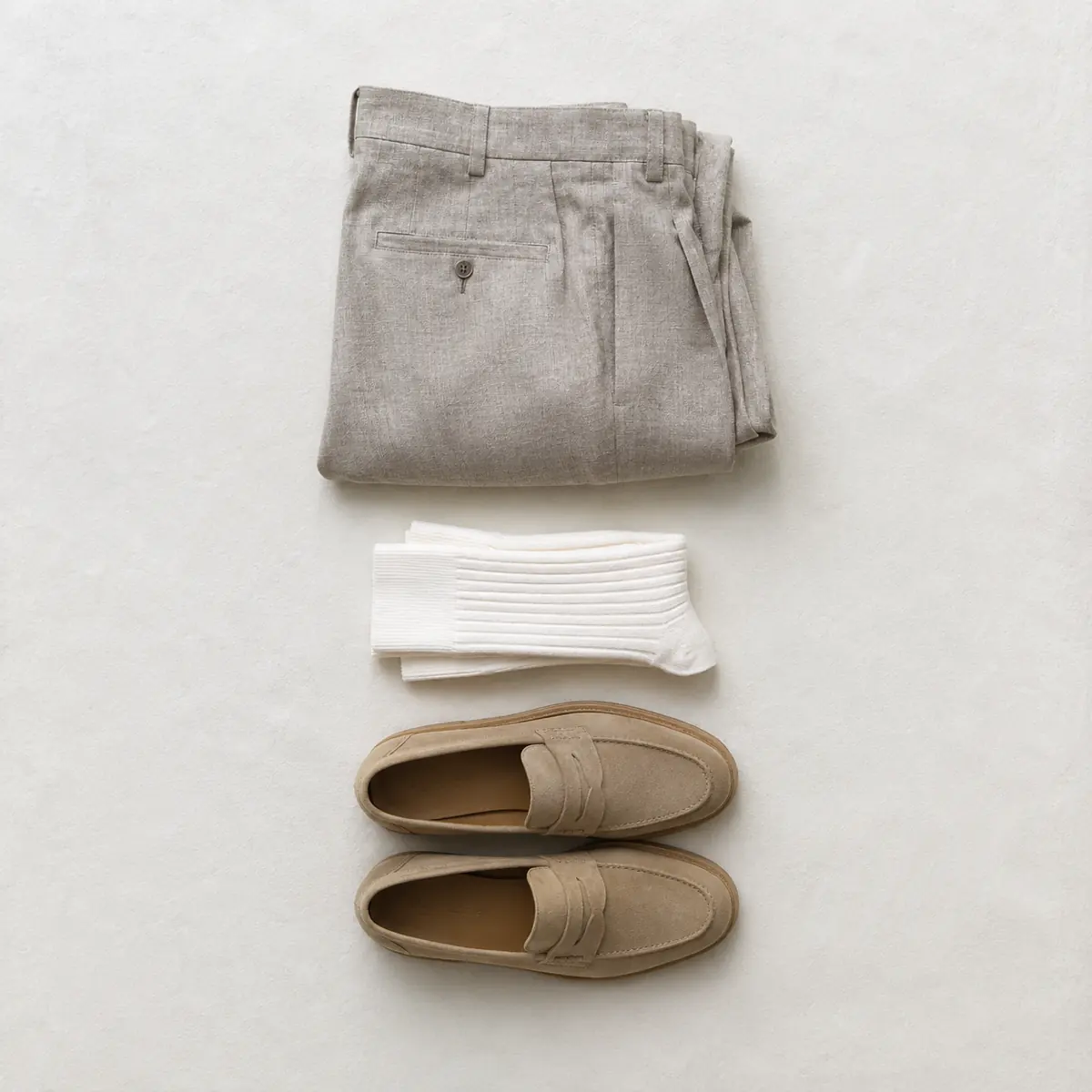
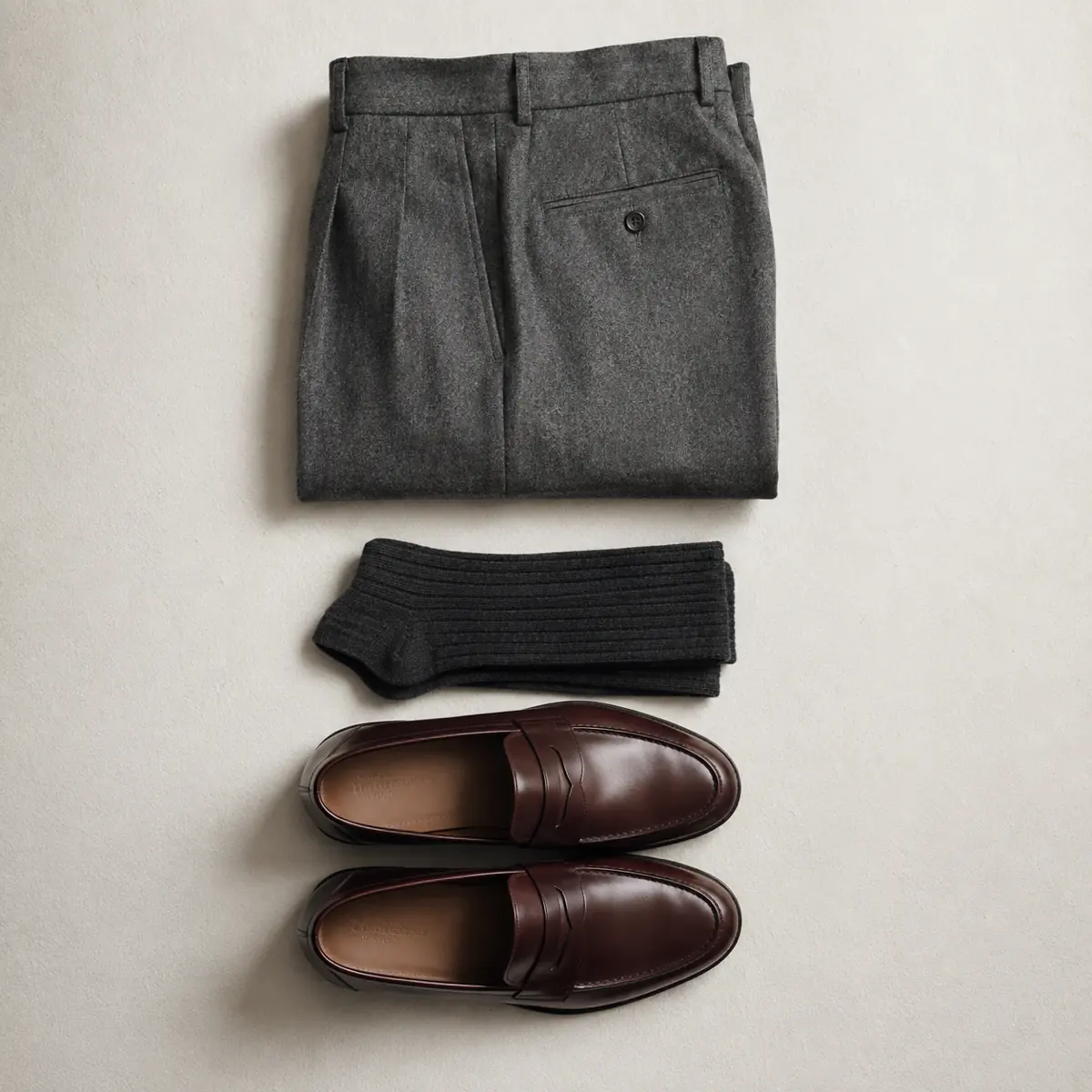
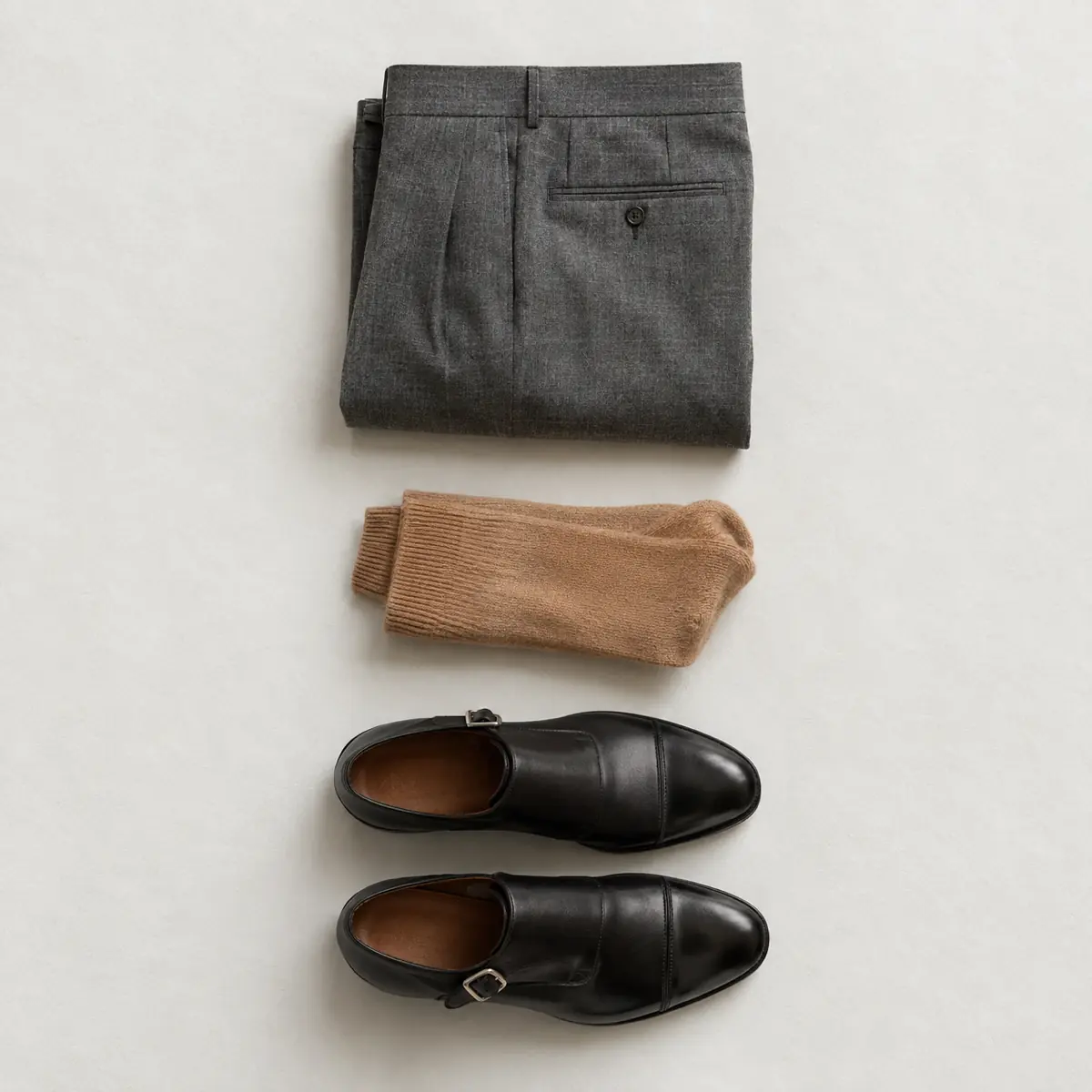
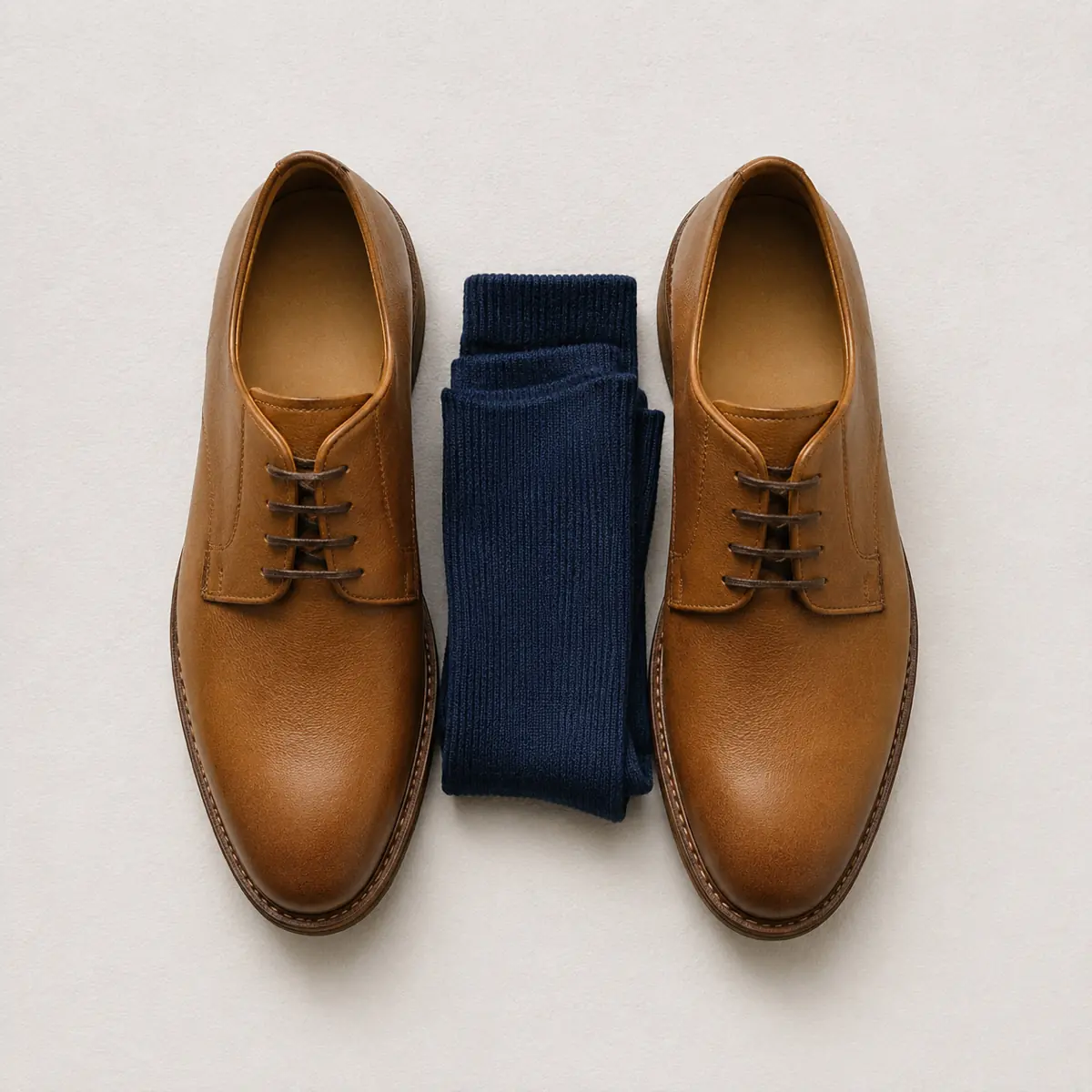
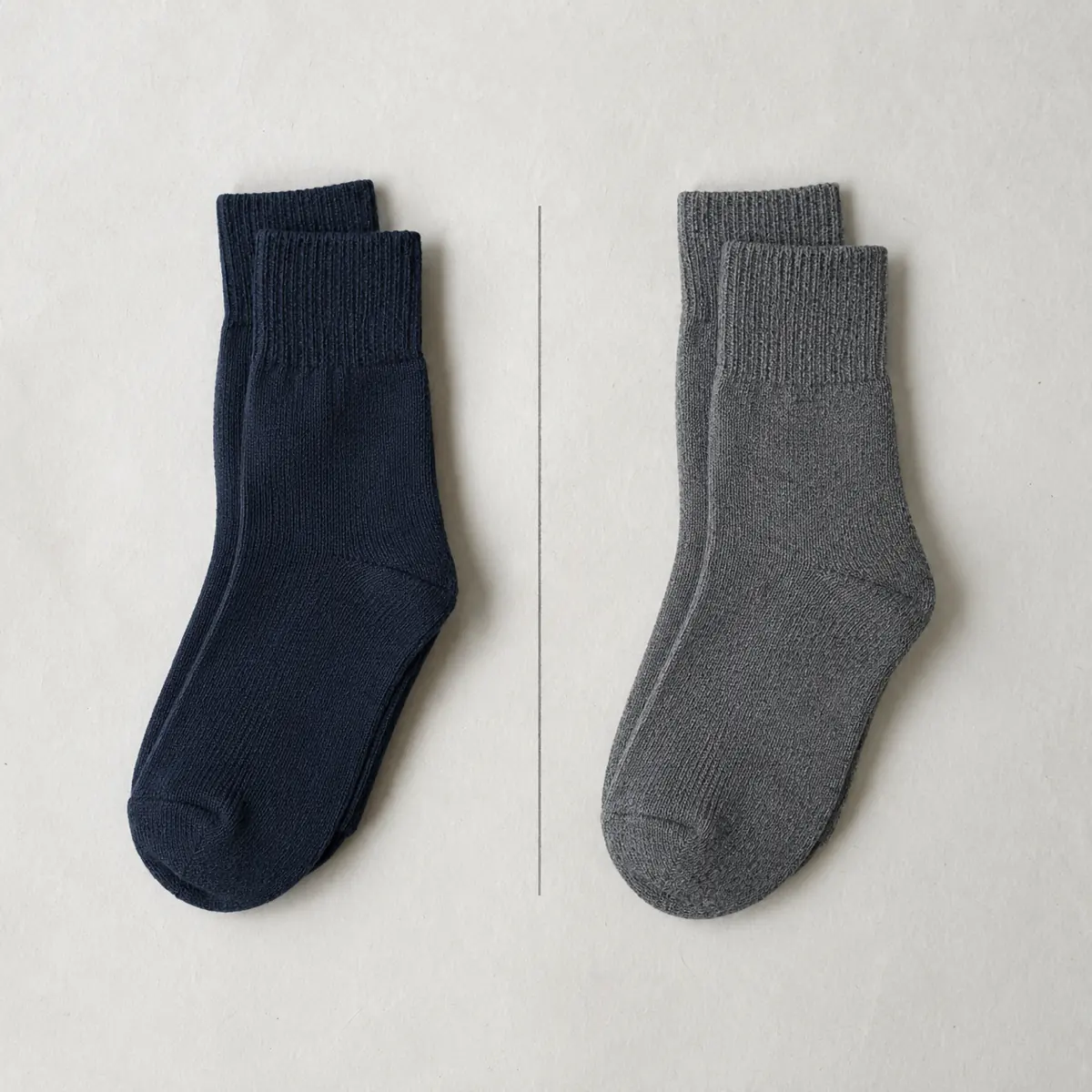
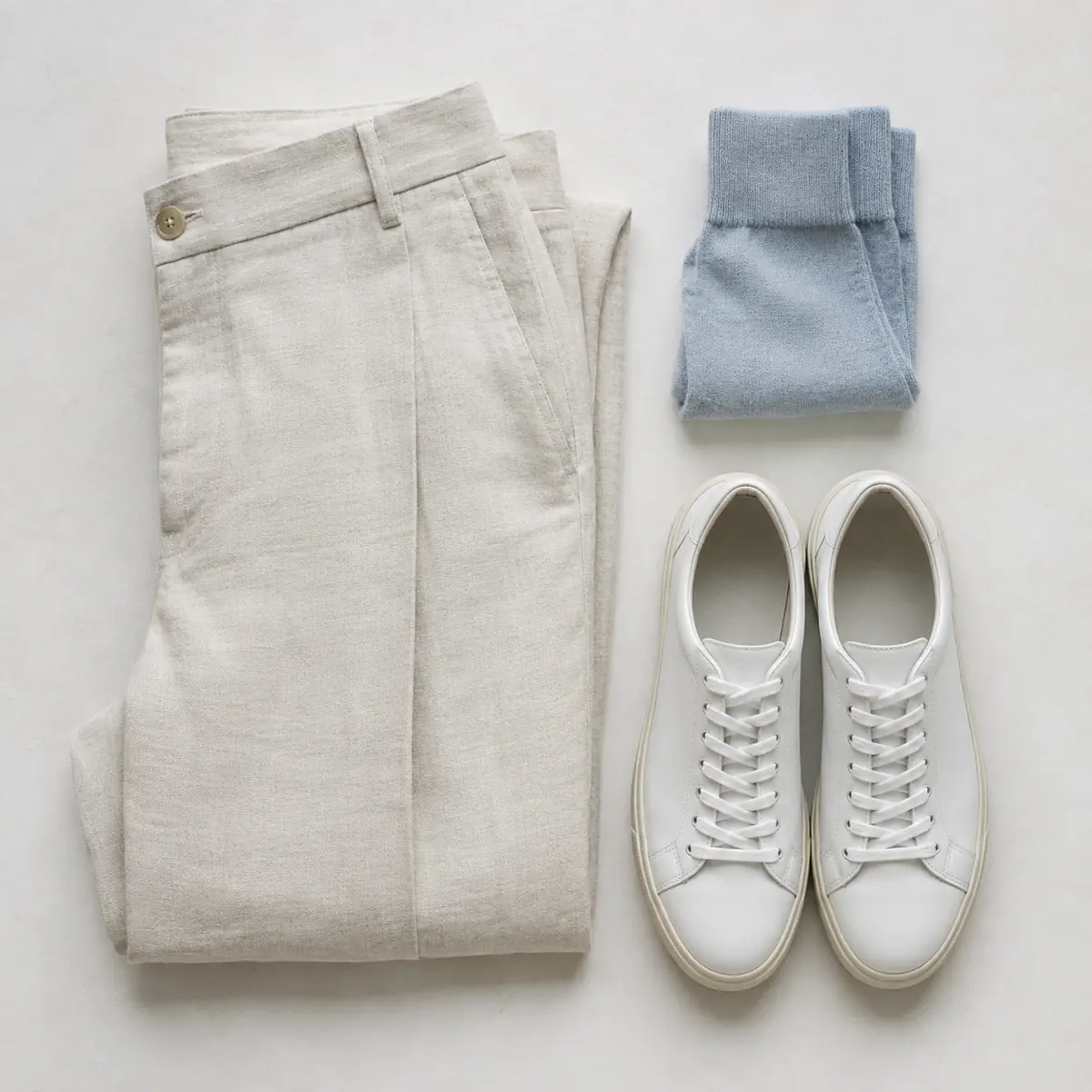
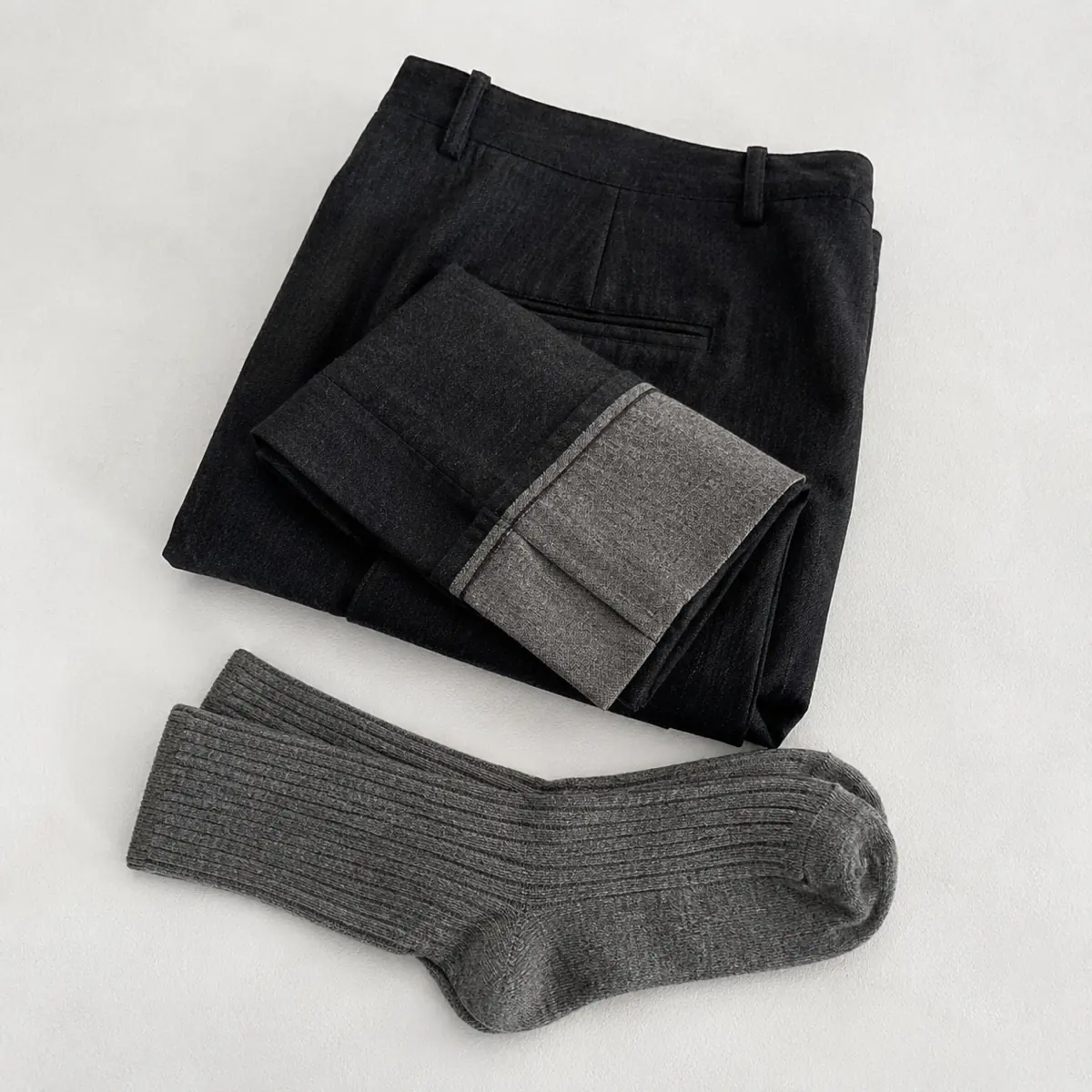
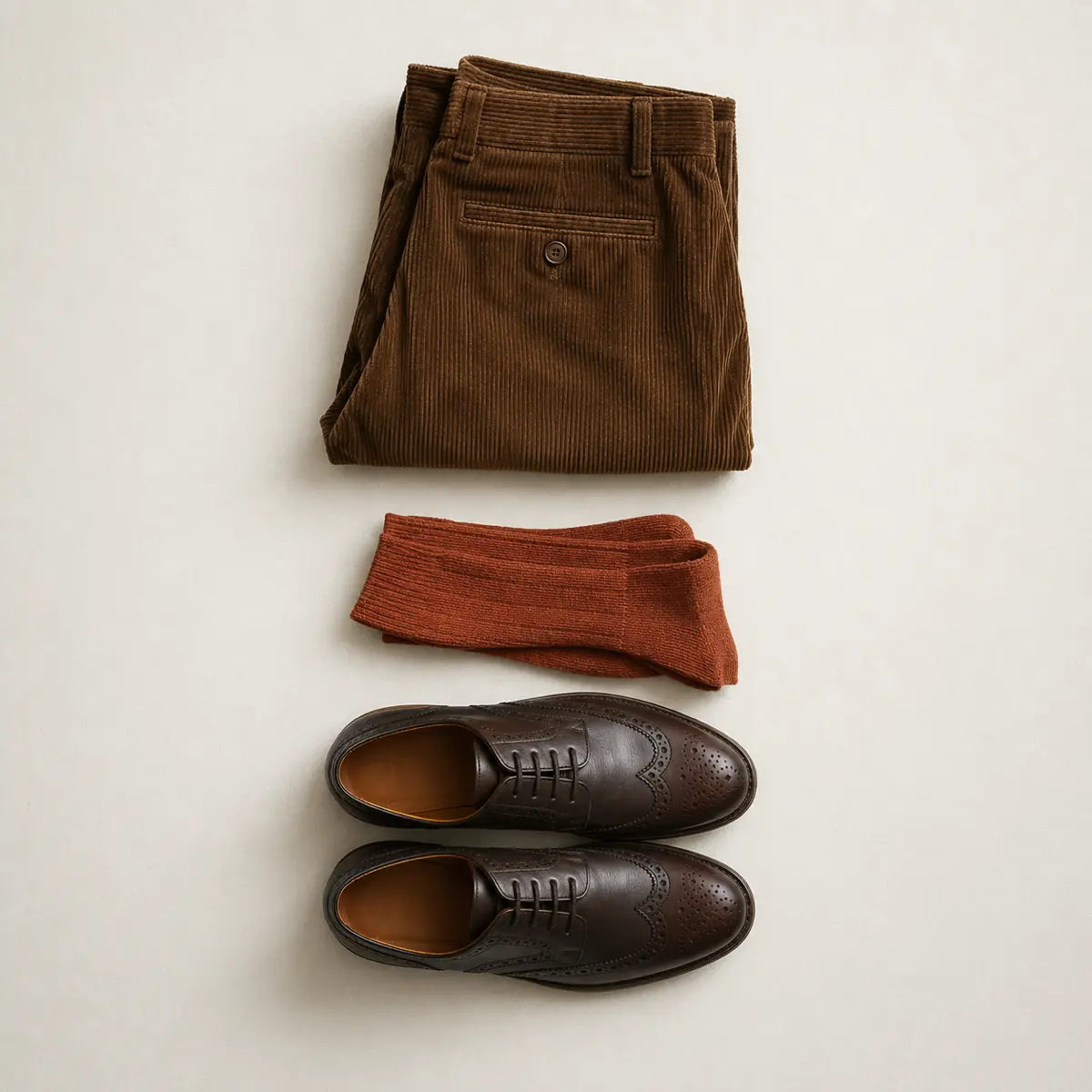
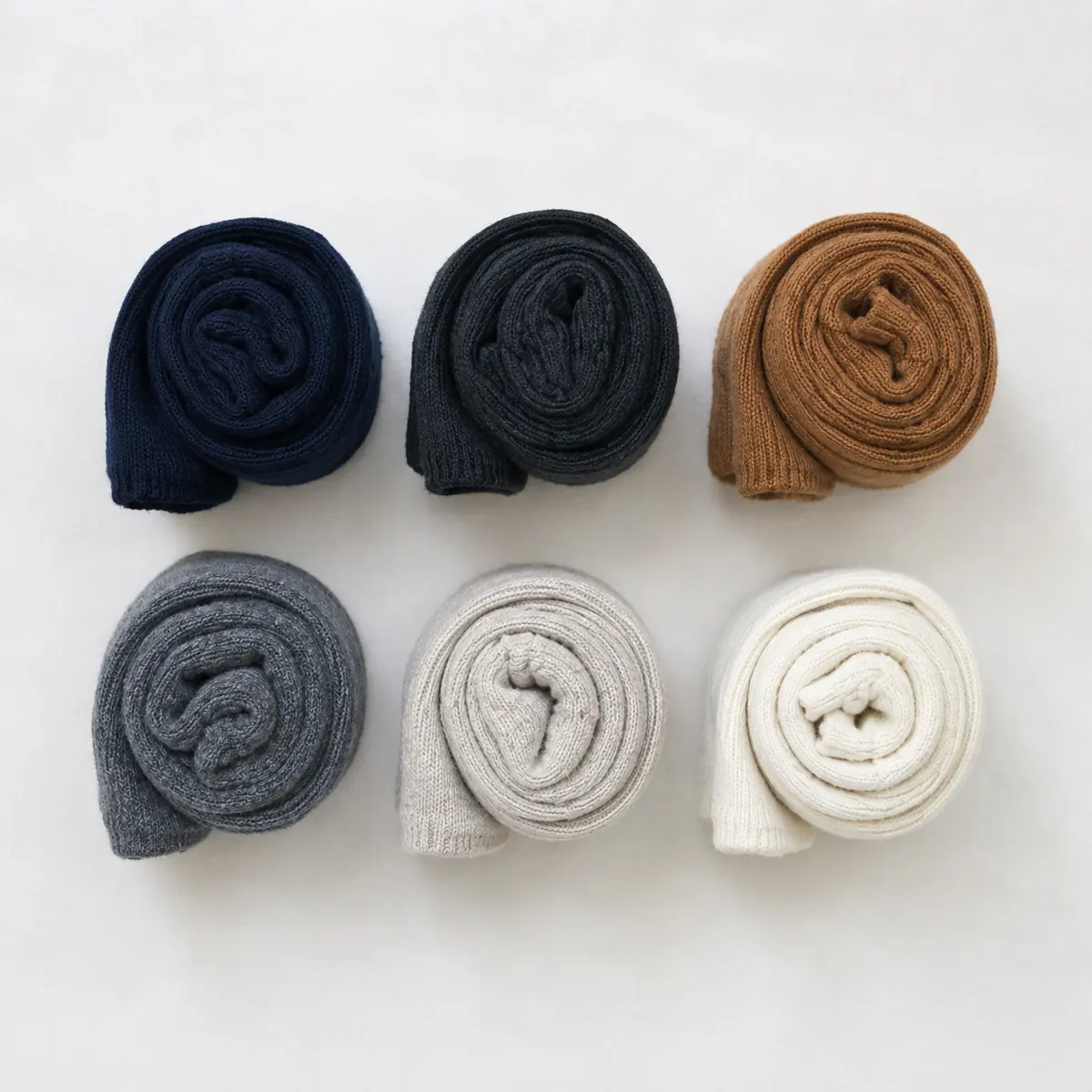
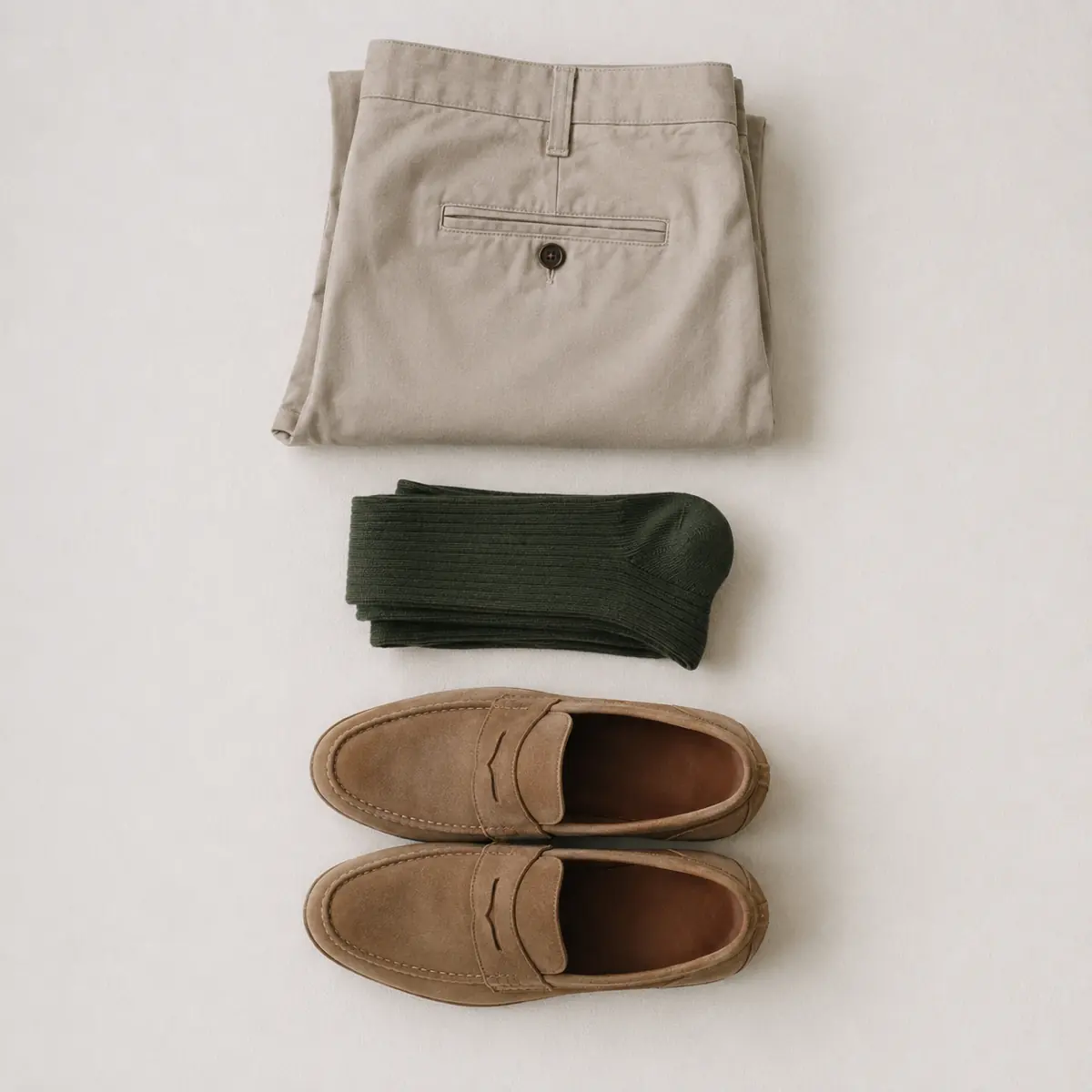
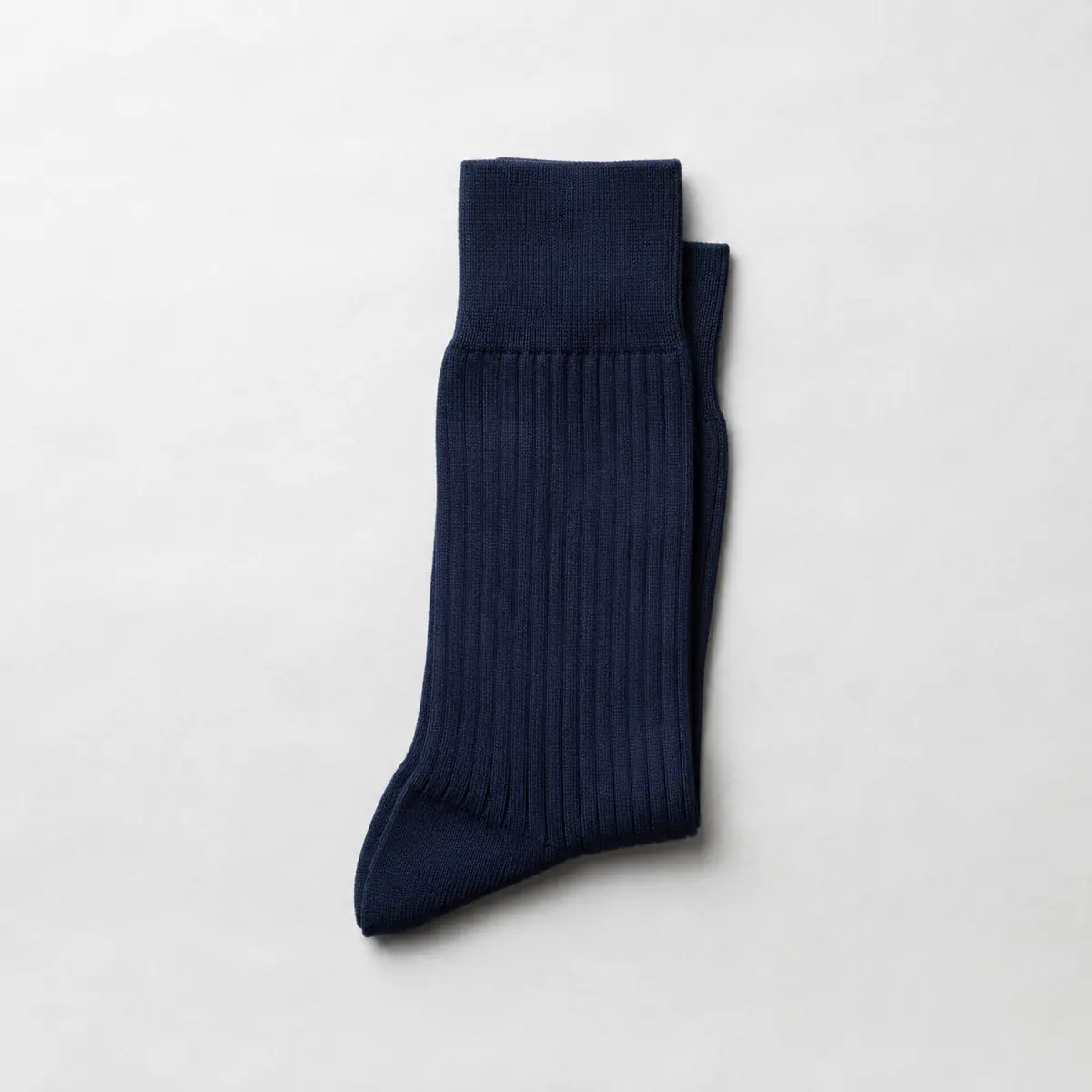
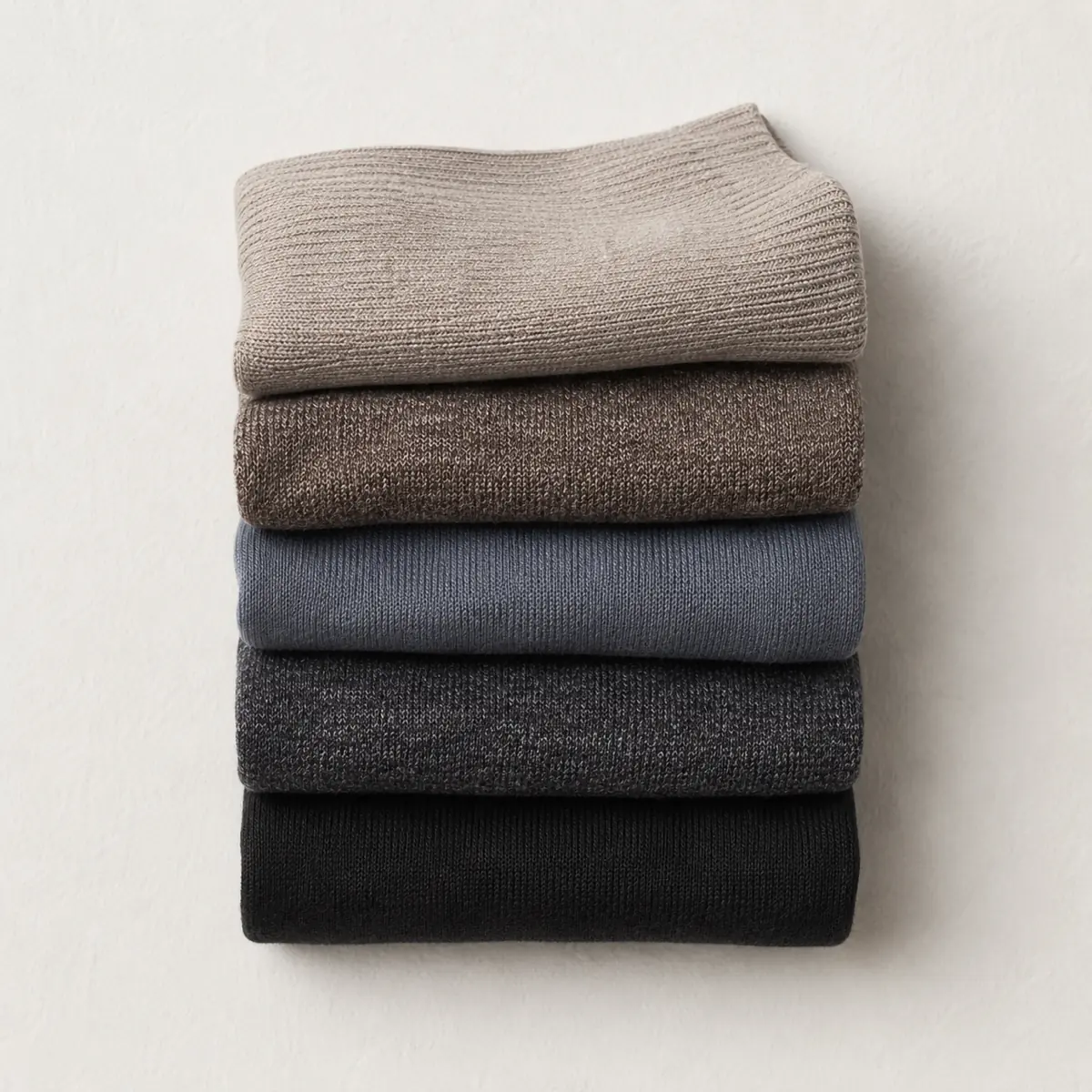
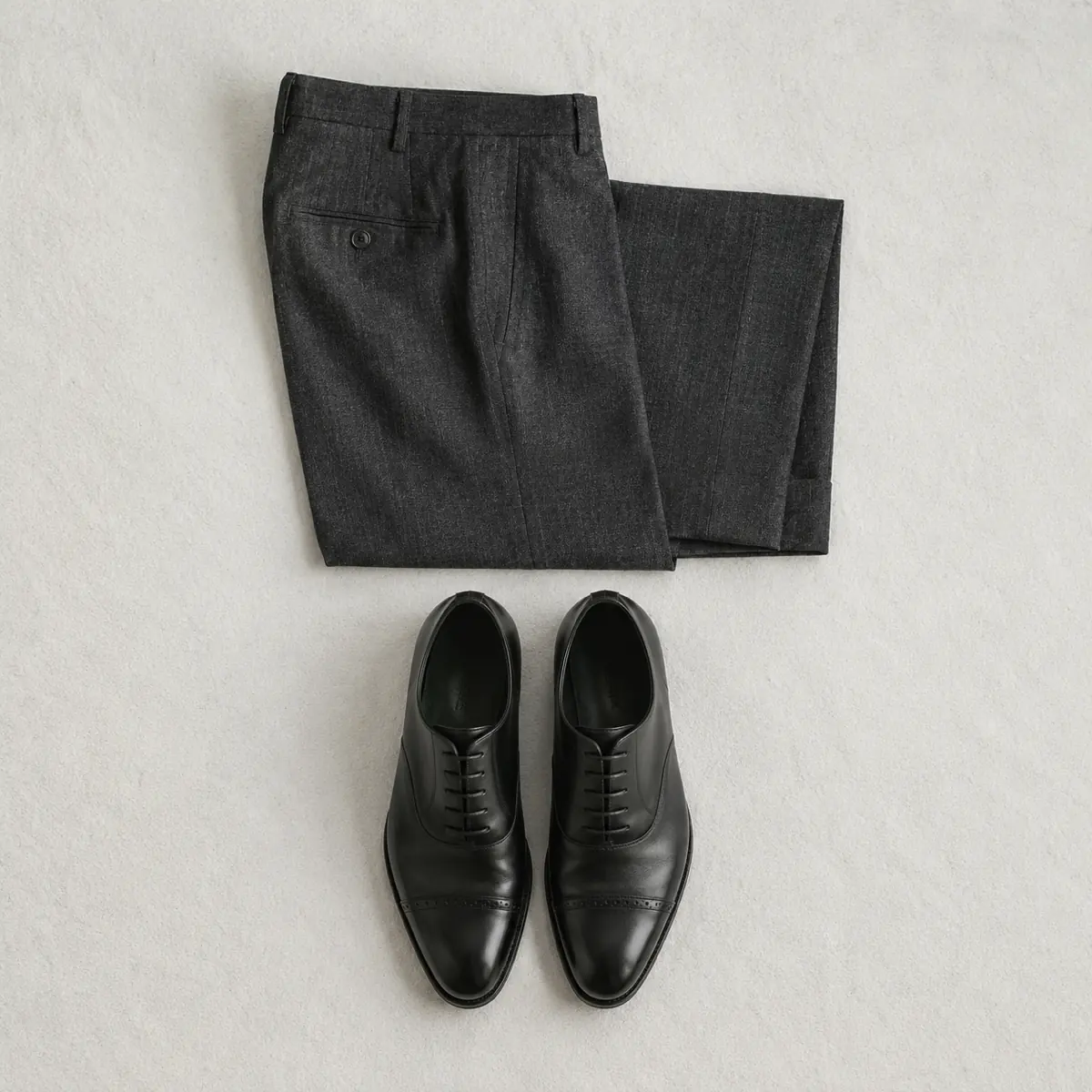
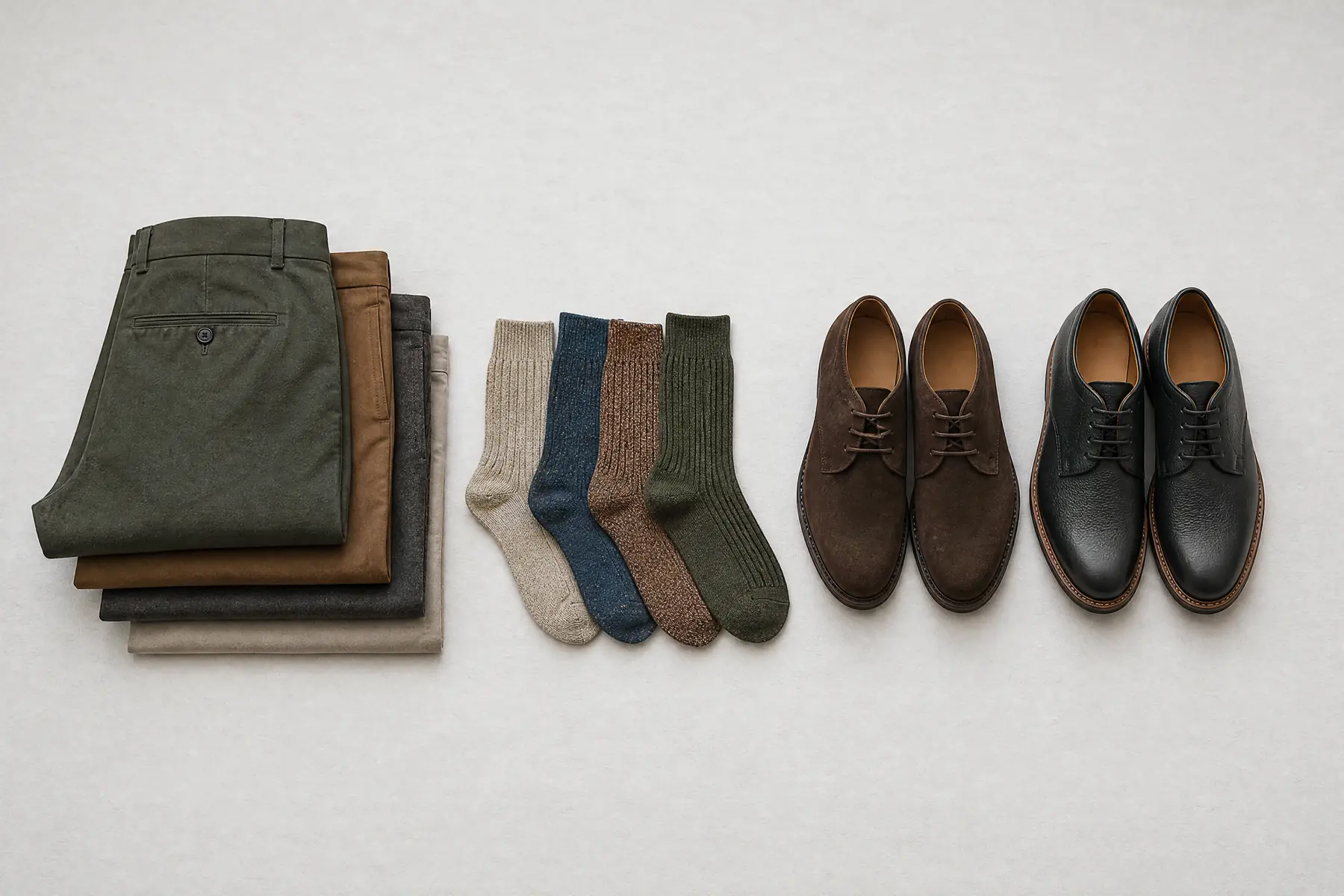
No figure, no leg, no foot, no brand. There is nothing to look at here except cloth, leather and the order they are laid in.
§ 06 — Where the rule does not reach
Telling somebody in shorts that their socks do not go with their trousers is the single most misleading thing a site like this could do. So the first thing every reading establishes is whether the rule operates at all — and when it does not, no verdict is produced.
None of this is folded away behind a control, and none of it sits behind a plan.
Above the sock there is a bare leg, not a trouser, so there is no colour to continue. The sock becomes a free-standing item and can be anything at all.
Fine, plain, over-the-calf, in the same black as the trousers. This is not a continuity reading; it is a settled requirement, and it overrides the general convention.
Height, cushioning and moisture decide the sock. Colour follows from what is available in the right construction, and the convention has no claim on it.
A sock that is obviously not trying to match anything reads as a choice rather than an accident. That is an entirely legitimate way to dress, and it has its own requirements — see the route below.
§ 07 — What is free and what is not
The free plan tells you whether the rule applies and whether the sequence runs or stops. That is the safety-critical half and it is never withheld, never watermarked over and never behind a sign-in.
What you pay for is the part you can act on: which of the two junctions the edge lands on, every exception that applies to your case, and the route for wearing the bright sock anyway so that it reads as a decision. Most people do not want to be governed by a convention. They want to know how to break it without looking like they made a mistake.
Prices are in US dollars and include VAT at 20%.
$0USD / month
Enough to find out whether a sequence runs or stops.
$7USD / month
or $67 USD / year
The whole reading, including how to break the rule on purpose.
$21USD / month
or $202 USD / year
For the combinations you reach for again and again.
§ 08 — Questions
Yes, you can wear the bright sock. No, none of it applies in shorts.
No. Not at all. A bright sock is a perfectly good thing to wear, and the convention this site describes is not a prohibition — it is an account of what the eye does.
What matters is that the sock reads as a decision rather than as the last clean pair in the drawer. That is mostly a question of distance: a sock a little away from the trouser looks like a near miss, and a sock clearly away from it looks deliberate. Going further usually helps more than pulling back.
It also helps if the sock is the only loud thing between the hem and the floor, and if its colour turns up once more somewhere small and above the waist. Every reading on this site includes a route for doing exactly this, on every plan tier that includes the full reading.
No. With shorts the rule does not apply at all.
The convention exists to protect the run of colour from the trouser hem down to the shoe. With shorts there is no trouser hem in that position, so there is no run to protect. The sock becomes a free-standing item and nothing below needs to match anything above.
This is why the site tells you whether the rule applies before it tells you anything else. Handing someone a verdict where the rule does not operate would be the most misleading thing we could do.
They are stored against your account so you can look at a past reading, and they are deleted when you delete the reading or close your account. You can delete any individual reading, and its photographs go with it.
Your photographs are not used to train any model. Not ours, not anyone else’s. They are processed to identify the dominant colour, the lightness and the surface of each item, and that is the whole of it.
We do not accept photographs of anyone wearing clothing. Three flat photographs of three items, laid out on a surface. We look at the colours in sequence, not at anyone’s legs.
The colour arithmetic is exact and it runs in your browser, where you can see the numbers it used. What it cannot be exact about is the world the photograph came from.
Phone cameras adjust white balance independently for each photograph, so three photographs of three items are three slightly different accounts of colour. Lighting where you actually stand will shift things again.
Where a reading is close, trust the physical items over the screen. Every reading carries a list of what it could not know, and that list is never hidden behind a plan.
You can cancel at any time from the billing page in your account. It takes one click and no conversation. Your plan keeps working until the end of the period you have already paid for.
You also have a statutory right to cancel within 14 days of subscribing, under the Consumer Contracts (Information, Cancellation and Additional Charges) Regulations 2013. If you ask us to start the service immediately during that period and it is fully performed, that right can end early — but only because you asked for immediate performance and acknowledged the consequence, both of which we record separately at checkout.
The cancellation and refunds page sets out every case in full and includes the statutory model cancellation form.
It expires at the end of the month it was issued for. Allowances do not roll over.
There is no credit pack, no top-up and no stored balance. An allowance is a measure of how much of the service you may use in a month; it is not money, it cannot be redeemed for cash and it cannot be transferred.
If you run out before the month is over, the options are to wait for the next month or to move to a larger plan.
No, and we are not equipped to. This site reads one narrow thing: whether three colours, in order, run into one another or stop.
It describes results as running or breaking, never as right or wrong, and it passes no judgement on anyone’s appearance. It gives no advice about body shape, proportion or figure — the continuity it describes is a property of a colour sequence, not of a person.
It also recommends no product. No sock, trouser or shoe brand is named anywhere on this site, and nothing here is a shopping link.
Yes. The service is for people aged 16 and over, and a paid subscription may only be taken out by someone aged 18 or over, since it is a contract.
If we learn that an account belongs to someone below those ages we will close it and delete the data held against it.
No. The sequence on the front page is fully working: change the sock and the reading changes with it, turn on shorts and the rule withdraws entirely. Nothing is held back behind a sign-in there.
An account is only needed to read your own three photographs and to keep a history of what you have read.
Trousers
Socks
Three photographs and a sentence about where you are going. The reading takes about as long as putting the shoes on.
We look at the colours in sequence, not at anyone’s legs.